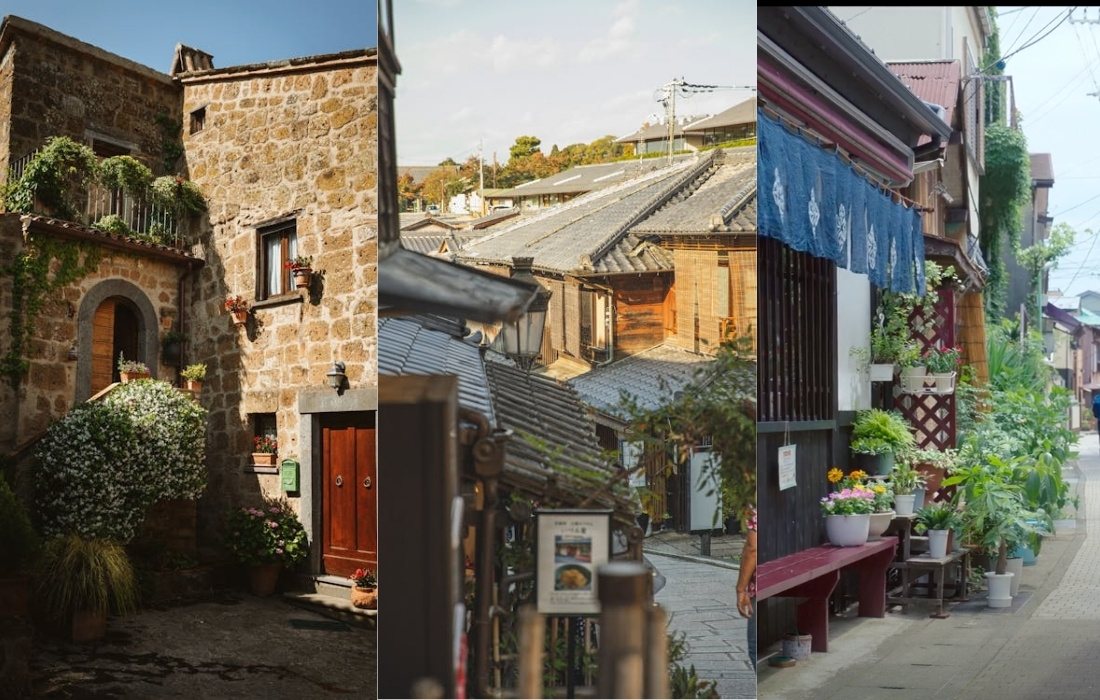
When watching Can This Love Be Translated?, it’s hard not to be drawn in by more than just the story. The filming locations play an important role in shaping emotions, framing key moments, and setting the overall tone of each scene.
In this post, I’ll take you through the drama’s filming locations scene by scene, starting from its very first appearance on screen. For each location, I’ll share where the scene was filmed, why the place matters, and how you can visit it in real life, including what to do there, when to go, and practical travel tips.
Whether you’re a fan of the K-drama series or a traveler inspired by cinematic landscapes, this guide invites you to step beyond the screen and into the places where the story came to life.
Scene 1 – The Bridge to Civita di Bagnoregio
📍 Filming location: Civita di Bagnoregio, Italy
This scene was filmed at Civita di Bagnoregio, a small hilltop village in central Italy that can only be reached by a long pedestrian bridge. Perched above a valley of eroding cliffs, the village feels isolated and timeless, setting a striking visual tone from the very beginning of the drama.
The slow walk across the bridge emphasizes distance and anticipation, allowing the landscape to speak before the story fully unfolds. With its stone houses, narrow streets, and panoramic views, Civita di Bagnoregio provides a cinematic sense of solitude that mirrors the quiet, reflective mood of the opening scene.
Travel tips for visiting Civita di Bagnoregio
- What to do: Walk across the pedestrian bridge, explore the medieval village, enjoy the valley views, and stop at a local café or restaurant.
- Best time to visit: Early morning or late afternoon. Spring and autumn offer pleasant weather and fewer crowds.
- How to get there: Travel to Bagnoregio by bus or car, then walk across the pedestrian bridge to the village.
- Things to note: The walk can be steep and exposed. Wear comfortable shoes and bring water, especially in warmer months.

This scene was filmed at Civita di Bagnoregio, a small hilltop village in central Italy, accessible only by a long pedestrian bridge. Visitors come here to walk across the bridge, explore the medieval village, enjoy panoramic views of the valley, and have a meal at local cafés. The best time to visit is early morning or late afternoon, especially in spring or autumn, when the weather is pleasant and the crowds are smaller.

Scene 2 – Gokurakuji Station, Kamakura
📍 Filming location: Gokurakuji Station, Kamakura, Japan
This scene was filmed at Gokurakuji Station, a small and quiet stop on the Enoden railway line in Kamakura. Surrounded by greenery and low hills, the station has a calm, unhurried atmosphere that contrasts gently with the characters’ inner emotions in the scene.
Unlike larger urban stations, Gokurakuji Station feels intimate and local. The curved platform, wooden benches, and slightly weathered roof give it a nostalgic charm that makes it a popular filming location for Japanese dramas and films. The setting allows the scene to feel natural and grounded, as if it could happen in everyday life.

Travel tips for visiting Gokurakuji Station
- What to do: Walk around the station area, take photos of the platform, and visit the nearby Gokurakuji Temple, which is just a short walk away.
- Best time to visit: Early morning or late afternoon for soft light and fewer people on the platform.
- How to get there: Take the Enoden Line from Kamakura Station or Hase Station and get off at Gokurakuji Station.
- Things to note: This is an active local station, so be mindful of commuters and follow station rules when taking photos.
Visiting Gokurakuji Station offers a quiet moment away from Kamakura’s busier tourist spots and gives fans of the drama a chance to experience the same peaceful atmosphere seen on screen.
Scene 3 – A Quiet Alley in Gion, Kyoto
📍 Filming location: Gion, Kyoto, Japan
This scene was filmed in a narrow alley in the Gion area of Kyoto, a neighborhood known for its preserved wooden townhouses and slow, everyday rhythm. Unlike Gion’s more famous main streets, these smaller alleys feel intimate and lived-in, making them a natural setting for quiet, reflective moments in the story.
The details of the street help ground the scene in reality. Indigo noren curtains hang outside small shops, potted plants line the walkway, and handwritten signs sit casually by the doorways. Nothing feels staged or overly dramatic. Instead, the location allows the scene to unfold gently, as if the characters are simply passing through a normal day in Kyoto.

Travel tips for visiting this area
- What to do: Wander through the smaller streets around Gion and Higashiyama, look for traditional shopfronts, and stop by a local café or eatery along the way.
- Best time to visit: Late morning or early afternoon on a weekday, when the alleys are quiet but shops are open.
- How to get there: Walk from Gion-Shijo Station or Kawaramachi Station, then explore on foot.
- Things to note: These are residential streets. Keep noise low, respect privacy, and avoid blocking the walkway when taking photos.
Visiting these quieter corners of Gion offers a different perspective from the postcard views. It’s in places like this that Kyoto feels most personal, and where scenes like this one feel especially believable.
Scene 4 – Enoshima Island with Mount Fuji in the Distance
📍 Filming location: Enoshima, Kanagawa, Japan
This scene was filmed on Enoshima Island, a small coastal island south of Tokyo, with Mount Fuji visible across the water in the distance. The setting immediately gives the scene a sense of openness and quiet reflection, as the characters sit facing the sea while the light slowly fades.
Enoshima is known for its sea views, walking paths along the coast, and rare clear-day views of Mount Fuji. In this scene, the island’s calm atmosphere and wide horizon help slow the pace of the story, allowing the dialogue and emotions to unfold naturally. The presence of Mount Fuji adds a subtle layer of symbolism, often associated with distance, permanence, and unspoken feelings.

Travel tips for visiting Enoshima
- What to do: Walk along the seaside promenade, watch the sunset, and look for Mount Fuji on clear days. You can also explore Enoshima Shrine or relax at a café overlooking the ocean.
- Best time to visit: Late afternoon to sunset. Winter and early spring offer the clearest views of Mount Fuji.
- How to get there: Take the Odakyu Line to Katase-Enoshima Station, then walk to the island.
- Things to note: Visibility of Mount Fuji depends on weather conditions. Bring a light jacket, as it can be windy by the sea.
Enoshima offers a quieter, more contemplative side of coastal Japan, making it a fitting backdrop for one of the drama’s most visually memorable moments.
Scene 5 – Walking Along the Enoden Railway in Kamakura
📍 Filming location: Along the Enoshima Electric Railway (Enoden) line, Kamakura, Japan
This scene was filmed along a residential stretch of the Enoden railway in Kamakura, where the tracks run directly through narrow neighborhood streets. With houses, flowers, and small gardens lining both sides of the rails, the setting feels intimate and unmistakably local.
Unlike busy train stations, this part of the Enoden line captures everyday life at a slower pace. The close distance between the railway and nearby homes creates a sense of closeness and vulnerability, mirroring the subtle tension and quiet curiosity between the characters as they walk along the tracks.
The scene feels spontaneous and unpolished, as if the characters have momentarily stepped outside the flow of the city. This kind of setting is one of the reasons the Enoden line frequently appears in films and dramas, offering a visual language that feels both nostalgic and real.

Travel tips for visiting this area
- What to do: Walk along nearby streets parallel to the tracks, observe the passing trains, and explore the surrounding residential neighborhoods.
- Best time to visit: Late afternoon for soft light and fewer trains.
- How to get there: Travel on the Enoden Line and explore the area between Gokurakuji Station and Hase Station on foot.
- Things to note: Do not walk directly on the tracks. Stay clear of trains and follow all local safety signs.
This quiet stretch of railway shows a side of Kamakura that feels deeply personal, where everyday life and cinematic moments naturally intersect.
If you’re planning to visit these filming locations across Italy and Japan, staying connected makes the journey much easier. I personally recommend using an eSIM for seamless internet access without the hassle of physical SIM cards. It’s especially convenient when navigating train routes, looking up filming spots, or updating your itinerary on the go.
👉 You can find my recommended Japan eSIM option here!
Frequently Asked Questions (FAQs)
Where was Can This Love Be Translated? filmed?
Can This Love Be Translated? was filmed across multiple countries, including Italy and Japan. Key filming locations featured in this post include Civita di Bagnoregio in Italy, as well as Kamakura, Kyoto, and Enoshima in Japan.
Are Enoshima and Kamakura the same place?
No. Enoshima and Kamakura are different locations, but they are very close to each other.
Enoshima is a small island near Fujisawa, while Kamakura is a coastal city known for its temples and residential neighborhoods. The two are connected by the Enoden railway line and can be visited easily in the same day.
Can visitors walk on the Enoden railway tracks?
No. Although some scenes show characters near or crossing the tracks, visitors should never walk directly on the railway tracks. These are active rail lines. Always stay on public paths and follow local safety signs.
Is Civita di Bagnoregio difficult to visit?
Civita di Bagnoregio is accessible, but it does require some walking. Visitors must cross a long pedestrian bridge to reach the village, and the path can be steep in places. Comfortable shoes and water are recommended, especially during warmer months.
What is the best season to visit these filming locations?
- Italy (Civita di Bagnoregio): Spring and autumn for mild weather and fewer crowds
- Japan (Kyoto, Kamakura, Enoshima): Spring and autumn are ideal, while winter offers the clearest views of Mount Fuji in Enoshima
Avoid peak summer if possible, as some locations can be hot and crowded.
Can these locations be visited independently, without a tour?
Yes. All filming locations mentioned in this article are public and easy to visit independently using public transportation. Japan’s train system makes it especially convenient to travel between Kyoto, Kamakura, and Enoshima.
Are these locations crowded with tourists?
It depends on the time and location:
- Gion’s main streets can be crowded, but smaller alleys are usually quiet
- Enoshima is busier on weekends and holidays
- Residential areas along the Enoden line are generally calm if visited respectfully
Visiting early in the day or on weekdays helps avoid crowds.
Is this itinerary suitable for non-fans of the drama?
Absolutely. Even without having watched the series, these locations offer:
- Scenic landscapes
- Local neighborhoods
- Historic towns and coastal views
The filming locations naturally double as meaningful travel destinations.
Conclusion
Following the filming locations of Can This Love Be Translated? is more than a way to trace scenes from a drama. It becomes a journey through places that quietly shape emotion, rhythm, and atmosphere. From the dramatic isolation of Civita di Bagnoregio to the everyday calm of Kamakura’s railway lines, each location adds depth to the story without ever demanding attention.
What makes these places memorable is their ordinariness. Narrow alleys, small stations, coastal paths, and residential streets become meaningful simply because the characters pass through them. Visiting these locations in real life offers the same experience, not as iconic landmarks to rush through, but as spaces to slow down and observe.
Whether you are retracing the drama scene by scene or discovering these destinations for the first time, these locations invite a different kind of travel. One that values stillness, context, and the quiet moments in between. In stepping beyond the screen, the journey becomes less about the story itself, and more about how place and emotion gently intersect.


