Introduction
If you have already followed the journey through Japan and Italy in Part One and Part Two, this chapter invites you to step into a very different kind of landscape.
In Episode Three, the story opens into the vast, quiet spaces of Alberta, Canada. Mountains replace city streets. Open skies stretch where ceilings once closed in. From golden meadows beneath the Rockies to ancient badlands carved by time, from softly lit bookstores to ordinary markets filled with everyday life, each location becomes a mirror for what the characters are feeling but not yet saying.
These are not just beautiful places. They are emotional landscapes, where silence carries meaning, where distance creates closeness, and where nature and human vulnerability exist in the same frame.
This episode is about space. The space between people. The space between words. And the space that allows feelings to finally surface.
Scene: Walking Through the Badlands
Filming Location: Drumheller Badlands, Alberta, Canada
The landscape felt ancient long before they arrived.
Under an endless sky, layered hills of weathered stone rise and fall in soft tones of beige and gray. A narrow trail winds through wide grasslands and shallow canyons, leading not toward noise, but toward stillness. This is a land shaped slowly by time, quiet, patient, and deeply cinematic.
In this scene, the Badlands surround the characters with space and silence. There are no city lights, no crowded streets, only the sound of wind brushing through dry grass and the gentle curve of the earth stretching in every direction. The openness reflects what remains unspoken between them, emotions beginning to surface in a place that asks for no hurry and no answers.
It is not a dramatic landscape of sharp peaks, but one of subtle layers and soft horizons. A place where feelings can rise naturally, the way rock and soil have settled here for thousands of years.

About the Real Location
The Drumheller Badlands are a unique geological region in Alberta, Canada, located near the town of Drumheller. Famous for their eroded canyons, hoodoos, and fossil-rich layers, the area includes Dinosaur Provincial Park, a UNESCO World Heritage Site and one of the world’s most important dinosaur discovery zones.
With its otherworldly formations and vast open skies, the Badlands are often chosen for films that need a sense of timelessness, isolation, and quiet reflection.
How to Visit in Real Life
- Location: Drumheller Badlands, Alberta, Canada
- Best time to visit: Late spring to early autumn, when the weather is mild and the colors are warm
- How to get there: About 1.5 to 2 hours by car from Calgary, with scenic viewpoints and walking trails throughout the area
Walking these paths under the wide prairie sky, it becomes clear why this place was chosen. Some landscapes do not speak loudly, but they stay with you, holding space for thoughts, memories, and the slow unfolding of connection.
Scene: Beneath the Canadian Rockies
Filming Location: Banff National Park, Alberta, Canada
The world suddenly opens.
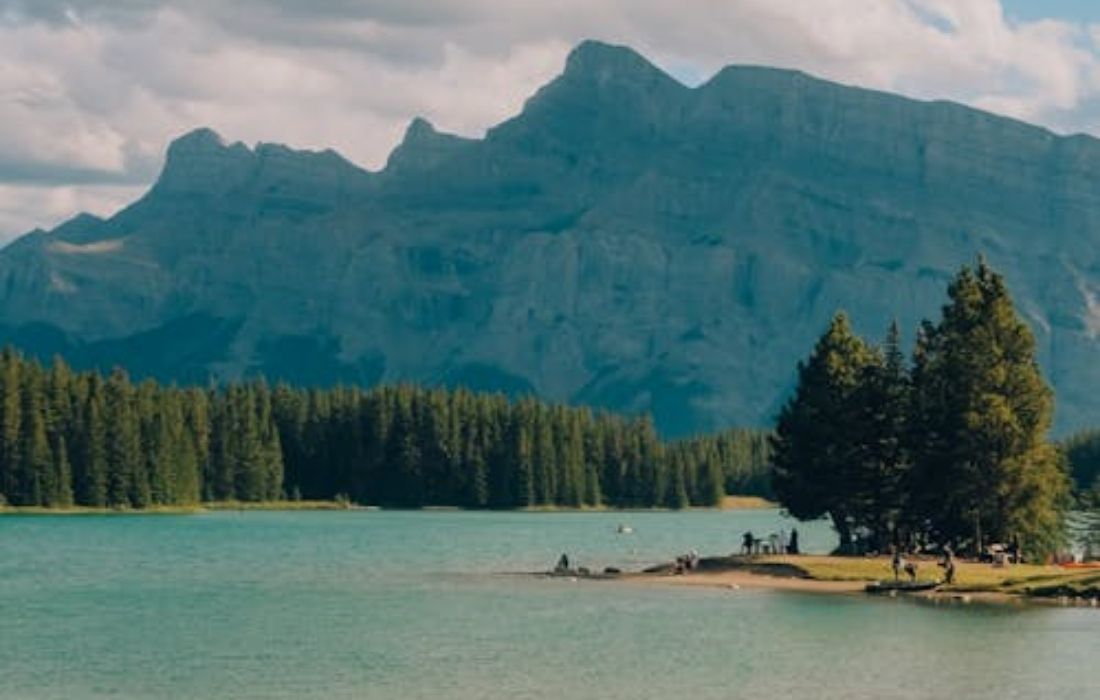
A wide field of pale gold stretches toward a line of dark green pines, and beyond them, the Rocky Mountains rise in quiet layers of stone and snow. Thin mist drifts across the lower slopes, softening the sharp edges of the peaks and turning the air into something almost dreamlike. Two small figures walk through the tall grass, their steps slow, as if unwilling to disturb the stillness around them.
In this scene, nature becomes a presence rather than a backdrop. The vastness of the landscape makes every movement feel gentle, every word unspoken feel heavier with meaning. The mountains stand like silent witnesses, ancient and unmoving, while the characters move forward, uncertain yet drawn together by the path ahead.
The golden field, the cool blue of the distant peaks, and the soft haze between them create a sense of transition. It feels like a moment between seasons, between decisions, between what has already been felt and what is about to be understood.

About the Real Location
Banff National Park lies in the heart of the Canadian Rockies in Alberta and is one of the most scenic mountain regions in the world. Areas around Mount Rundle, Vermilion Lakes, and the open meadows near Banff and Canmore are known for exactly this kind of view. Wide grasslands in the foreground, dense pine forests in the middle, and dramatic limestone peaks rising behind them.
This combination of openness and grandeur makes Banff a favorite filming location for stories that need both intimacy and scale, where human emotions are set against the timeless presence of nature.
How to Visit in Real Life
- Location: Banff National Park, Alberta, Canada
- Best time to experience this atmosphere: Early autumn or late spring, when the grass turns golden and light mist often hangs around the mountains
- How to get there: About 1 to 1.5 hours by car from Calgary, with many scenic pullouts and walking trails near Banff and Canmore
Standing in these fields with the Rockies rising quietly in front of you, it is easy to feel small, yet strangely comforted. Some places do not rush your thoughts. They simply hold them, the way the mountains hold the sky.
Scene: Beneath the Northern Lights
Filming Location: Banff National Park or Jasper National Park, Alberta, Canada
The world falls into silence.
Dark mountains rise like shadows against the night sky, their outlines softened by mist and distance. A frozen lake lies still in the foreground, reflecting the first faint glow of green light above. Slowly, the aurora begins to move, spreading across the sky in wide, flowing curtains, painting the darkness with shades of emerald and blue.
Two figures stand side by side at the water’s edge, watching the sky as if afraid to break the moment. They are small against the vast landscape, their presence quiet, almost fragile, beneath a phenomenon that feels both ancient and fleeting.
In this scene, the Northern Lights become a visual echo of the characters’ emotions. Like feelings long held inside, the light appears suddenly, fills the sky with beauty, and then drifts away, leaving only reflection and memory. The stillness of the lake, the cold air, and the slow movement of color create a space where words are unnecessary, and silence says everything.

Visiting in Real Life
Location: Banff National Park or Jasper National Park, Alberta
Best time: Late autumn to early spring, during clear, dark nights
Ideal conditions: Low light pollution, high solar activity, and calm weather
Standing by a mountain lake under the aurora, with the Rockies resting quietly in the dark, it is easy to understand why this moment feels almost unreal. Some scenes are not meant to be spoken. They are meant to be felt, like light moving across the sky and disappearing just as gently as it arrived.
Scene: The Night Glamping Camp in Alberta, Canada
Soft golden light spills from a row of canvas tipis, cutting through the deep blue of the Rocky Mountain night. In this scene, the story shifts into a quieter rhythm as the characters gather around a fire, wrapped in the warmth of lanterns, wooden chairs, and the gentle hum of the forest. The setting feels both intimate and cinematic, a moment suspended between adventure and reflection.
This campsite was filmed in Alberta, Canada, most likely within the Banff or Jasper region of the Canadian Rockies, where vast pine forests and open meadows create the perfect backdrop for luxury-style wilderness camps. The teepee-style tents, often used in glamping resorts and film sets across the Rockies, echo Indigenous architectural forms while offering a romantic, storybook atmosphere on screen.
What makes this location especially powerful is the contrast between light and shadow. The soft glow of the tents stands out against the dark silhouettes of evergreen trees, creating a visual cocoon that mirrors the emotional shelter the characters find in each other during this chapter of the journey.
For travelers, similar experiences can be found at glamping sites around Banff National Park, Jasper National Park, and the foothills of the Canadian Rockies, where nights are spent beneath star-filled skies, surrounded by silence broken only by wind in the trees and distant wildlife. It is the kind of place where conversations grow deeper, time slows, and the world feels temporarily reduced to firelight, fabric, and forest.
Scene: Calgary Farmers’ Market, Alberta
Where everyday life quietly continues, even when emotions are in turmoil
Amid the vast northern skies and the dramatic mountain landscapes of Alberta, the story briefly returns to something beautifully ordinary: Calgary Farmers’ Market, a local market in the heart of Calgary.
The bold red “FARMERS MARKET” sign, rows of colorful produce, wooden picnic tables under soft daylight, and people moving at an unhurried pace create a warm, grounded atmosphere. It is a place where daily routines carry on, even as the characters wrestle with their own emotional turning points.
This is the kind of location cinema loves.
Not spectacular in scale, but deeply human and instantly relatable.
With its open-air layout, natural light, and relaxed community vibe, Calgary Farmers’ Market often serves as a perfect setting for scenes that need to feel real and intimate, such as:
- Chance encounters
- Quiet conversations
- Moments of calm before or after emotional shifts
- A pause in the characters’ inner journeys
For travelers visiting Calgary, this is a spot you can easily walk into and recognize from the screen. The scent of fresh bread, fruit, and coffee mixing with the crisp Alberta air makes the place feel both cinematic and comfortingly real.

Scene: The Next Page Books & Coffee, Inglewood, Calgary
This quiet evening scene unfolds in front of The Next Page Books & Coffee, a beloved independent bookstore in Calgary’s historic Inglewood district. Warm light spills from the tall windows, revealing shelves packed with novels, wooden reading tables, and the gentle glow of hanging lamps. Outside, the street feels calm and intimate, the kind of place where conversations slow down and thoughts linger a little longer.

In the story, this location mirrors an emotional pause. A bookstore café is not just a backdrop for coffee and books, but a space for reflection, unspoken feelings, and small moments of connection. Inglewood, with its brick façades and local artisan shops, adds a timeless, almost nostalgic mood that contrasts beautifully with the vast natural landscapes seen earlier in Alberta.
For travelers, The Next Page is easy to visit and perfect for a quiet break. Order a coffee, browse the shelves, and sit by the window to watch the neighborhood pass by. It is one of those places where you can feel the everyday rhythm of Calgary while stepping into the same atmosphere captured on screen.
Address here: 1217A 9 Ave SE, Calgary, Alberta T2G0S9
Conclusion
From the layered stillness of the Drumheller Badlands to the quiet fields beneath the Rocky Mountains, from a glowing glamping camp at night to the familiar warmth of a local market and a small bookstore in Inglewood, Alberta reveals itself as more than a backdrop. It becomes a silent storyteller.
Each location holds a different kind of pause. Some are vast and humbling, others small and intimate, but all of them offer room for reflection, for unspoken emotion, for moments that unfold slowly and honestly.
Walking these places in real life, you begin to understand why they were chosen. Not for spectacle alone, but for the way they hold silence, light, and distance with such grace. They remind us that some of the most important scenes in any story happen quietly, under open skies, beside still water, or behind warmly lit windows on an ordinary street.
In this chapter of the journey, Alberta does what it does best. It does not rush the heart. It simply gives it space to breathe.
Faqs
Is the Northern Lights scene real or CGI?
The aurora was likely enhanced for cinematic effect, but Banff and Jasper National Parks are real locations where the Northern Lights can be seen during strong solar activity.
Can you visit the Drumheller Badlands in real life?
Yes. The Drumheller Badlands are open to visitors and include Dinosaur Provincial Park, hoodoos, hiking trails, and scenic viewpoints.
Where is the glamping campsite scene located?
The scene was filmed in Alberta, most likely near Banff or Jasper, using a luxury tipi-style glamping set commonly found in the Canadian Rockies.
Is The Next Page Books & Coffee a real place?
Yes. It is a real independent bookstore and café located at 1217A 9 Ave SE, Inglewood, Calgary.
Can tourists visit the Calgary Farmers’ Market from the show?
Yes. Calgary Farmers’ Market is open year-round and easy to visit, offering local food, produce, and a recognizable filming backdrop.
Best time to visit these filming locations?
Late spring to early autumn for Badlands and Banff landscapes. Late autumn to early spring for Northern Lights in Banff or Jasper.
