There is a reason Andor feels different from every other Star Wars series. It is not louder. It is not shinier. It feels real. The streets feel walked on. The buildings feel heavy. The landscapes feel like places where history has already happened, long before a camera arrived.
Season 2 doubles down on that realism. Instead of leaning into green screens and virtual volumes, the production once again turned to real cities, mountains, quarries, villages, and historic architecture across Europe. These locations were not chosen simply because they looked futuristic or alien. They were chosen because they already carried the weight of power, resistance, isolation, or quiet survival. In Andor, the setting is never decoration. It is part of the story.
From a Spanish city that quietly became the Imperial Senate District on Coruscant, to a sacred mountain range standing in for Mon Mothma’s home planet Chandrila, Season 2 expands the galaxy without ever feeling artificial. Even the most distant worlds are rooted in places you can stand in, walk through, and recognize.
In this guide, we break down every major filming location used in Andor Season 2, answering the most asked questions from fans and mapping each fictional planet back to its real-world counterpart. Once you know where these scenes were filmed, watching Andor becomes a different experience entirely.
Which Real-World City Became the Imperial Senate District on Coruscant?
For Season 2, Andor needed Coruscant to feel bigger, colder, and more institutional than ever before. This was no longer just the backdrop of imperial power. It was the machinery itself. Instead of inventing that scale digitally, the production chose a real city that already feels like it belongs to the future.

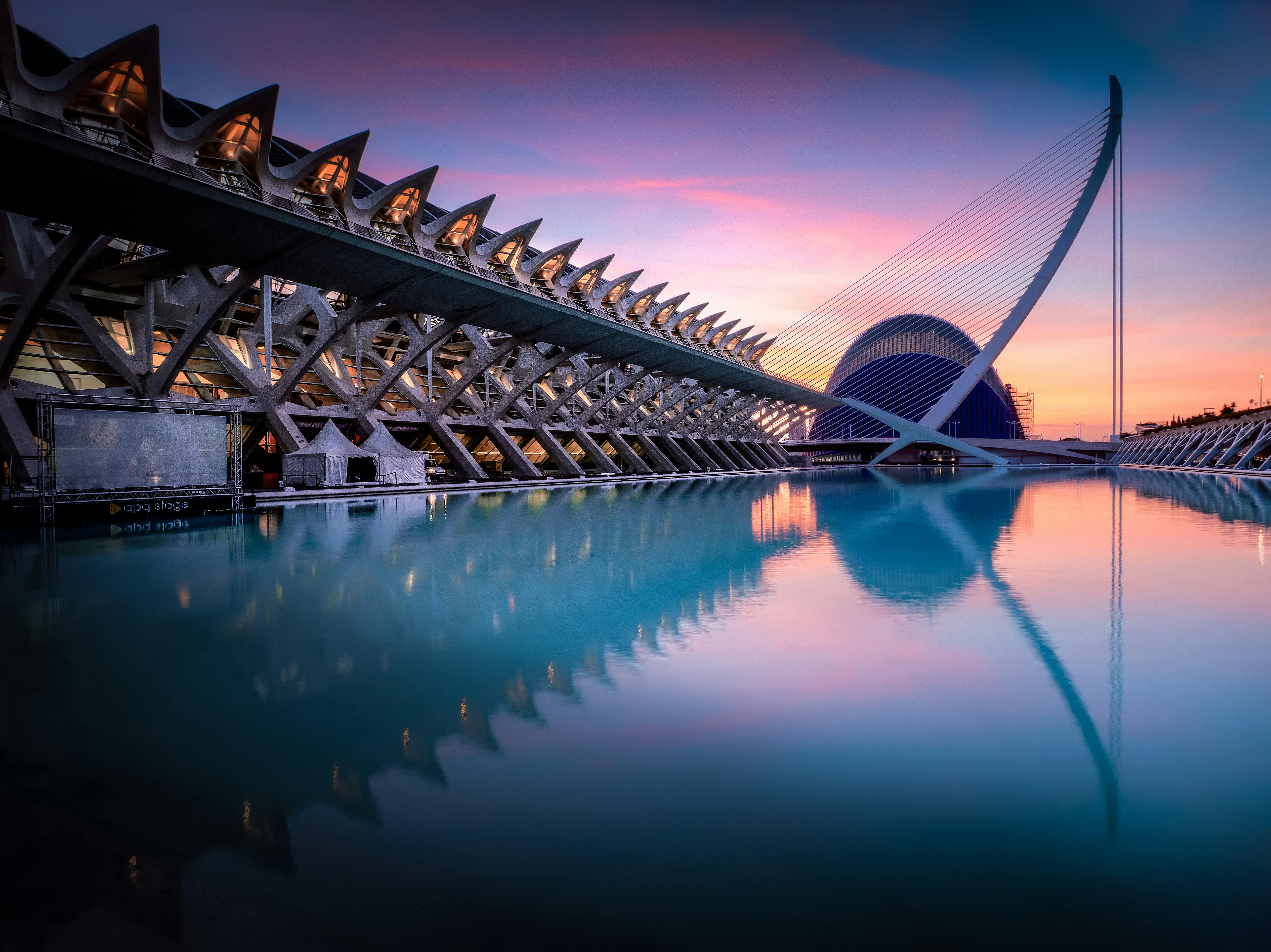
The Imperial Senate District on Coruscant was filmed in Valencia, Spain, specifically at the City of Arts and Sciences. Designed by architect Santiago Calatrava, this sprawling complex of white concrete, glass, and sweeping curves looks less like a movie set and more like a civilization that has already outrun its humanity. Long corridors stretch without warmth. Vast plazas dwarf the people moving through them. Power feels distant, elevated, and untouchable.
What makes Valencia such a perfect stand-in for Coruscant is restraint. The production did not need to transform the space aggressively. Instead, subtle digital extensions and controlled framing allowed the real architecture to do most of the storytelling. The Senate buildings feel authoritative not because of visual effects, but because the space itself imposes order.
Walking through the City of Arts and Sciences today, it is easy to understand why it was chosen. It does not feel like a location pretending to be the future. It feels like a future that already exists, which is exactly what Andor needs Coruscant to be.
Where Is the Mountain Range That Became Chandrila, Mon Mothma’s Homeworld?
Chandrila has always existed in Star Wars as an idea more than a place. It is known as the homeworld of Mon Mothma, a planet associated with diplomacy, tradition, and moral restraint. In Andor Season 2, the challenge was to finally give Chandrila a physical presence that matched the quiet gravity of its most important character.

That presence came from the Montserrat mountain range in Catalonia, Spain.
Rising sharply from the surrounding plains, Montserrat is defined by its serrated rock formations and an atmosphere that feels both ancient and ceremonial. The landscape is dominated by silence, stone, and elevation, with narrow paths winding toward monasteries that have stood for centuries. It is not a place that feels bustling or political. It feels contemplative. That contrast is exactly what gives Chandrila its emotional power in the series.
Rather than dressing the mountains with heavy visual effects, the production leaned into what already existed. Wide shots emphasize scale and isolation, while tighter frames use natural shadows and textures to create intimacy. The result is a world that feels deeply rooted, as if its traditions were carved directly into the rock.
For Mon Mothma, Chandrila is not just home. It is a reminder of the values she is slowly being forced to compromise. Filming these scenes in a real, sacred landscape gives that tension a weight that no digital environment could replicate.
What Is the Historic Spanish Castle Used for the Marketplace Scenes?
One of Andor’s greatest strengths is its attention to ordinary life under extraordinary pressure. Markets, trade routes, and public gathering spaces are not treated as background decoration. They are where power, surveillance, and survival quietly intersect. For Season 2, those everyday scenes needed a location that felt layered with history rather than constructed for spectacle.
The production found that texture at Xàtiva Castle, located in Spain’s Valencian Community.

Perched along a mountain ridge, Xàtiva Castle is a fortress shaped by centuries of conflict, occupation, and adaptation. Its courtyards, stone stairways, and narrow passages naturally suggest a place where people have gathered, traded, and watched one another for generations. Instead of transforming the site into something unrecognizable, the show leaned into its existing structure, allowing banners, stalls, and practical set dressing to suggest an off-world marketplace without erasing the castle’s identity.
The stone surfaces do much of the storytelling work. Weathered walls and uneven paths create a sense of age and continuity, reinforcing the idea that life continues even as regimes rise and fall. The camera frequently lingers at human height, placing viewers inside the crowd rather than above it, which makes the space feel lived in rather than monumental.
By choosing a real medieval castle for these scenes, Andor avoids the polished aesthetic often associated with science fiction markets. What we see instead is a place that feels functional, crowded, and slightly uneasy, exactly how daily life under imperial oversight should feel.
Which UK Studio Housed the Massive Practical Set for Ghorman’s Capital City?
Ghorman is one of the most important new worlds introduced in Andor Season 2, not because of spectacle, but because of what it represents. It is a civilian capital, a place of culture, protest, and political tension. To tell that story convincingly, the production needed more than fragments of streets or isolated interiors. It needed a city that actors could actually move through.
That city was built at Pinewood Studios in Buckinghamshire, England.
Rather than relying on digital environments, the production constructed a full-scale practical city on Pinewood’s backlot. Streets, plazas, building façades, and public spaces were designed as a cohesive urban environment, allowing scenes to unfold naturally across real distances. Actors were not reacting to green screens or imagined architecture. They were surrounded by it.
This approach is central to why Ghorman feels alive on screen. Crowd scenes have depth. Protests feel spatially real. The sense of compression, surveillance, and escalating tension comes from the way bodies move through an actual built environment. The camera is free to follow characters organically, rather than being locked into limited angles dictated by visual effects.
Pinewood Studios has long been a cornerstone of large-scale filmmaking, but Andor uses it in a deliberately restrained way. Ghorman’s capital is not grand in a glossy sense. It is functional, dense, and slightly oppressive, which makes its eventual unrest feel inevitable. The realism of the set turns Ghorman from a fictional planet into a believable place, and that believability is what gives its story weight.
Where Was the Rebel Base at Yavin 4 Filmed in Season 2?
Yavin 4 carries enormous weight in Star Wars history. It is one of the saga’s most recognizable rebel strongholds, and returning to it always risks tipping into nostalgia. Andor Season 2 approaches that legacy carefully, choosing realism and narrative necessity over visual homage.
For this season, the production did not return to the original filming locations historically associated with Yavin 4. Instead, scenes connected to the Rebel base were created through a combination of UK woodland locations and constructed interiors, designed to evoke the spirit of the planet without recreating it shot for shot.
The outdoor elements were filmed in dense English forests, chosen for their layered canopies, muted light, and damp, enclosed atmosphere. These environments naturally convey secrecy and impermanence, reinforcing the idea that the Rebel Alliance is still fragile and constantly on the move. Interiors were built on soundstages, allowing the production to control scale, lighting, and movement while maintaining continuity with the natural surroundings.
This decision reflects Andor’s broader philosophy. Yavin 4 is treated not as a monument, but as a working base. It is practical, hidden, and unromantic. By avoiding iconic wide shots and recognizable landmarks, the series keeps the focus on people, planning, and pressure rather than legacy imagery.
In Season 2, Yavin 4 feels less like a destination and more like a moment in time, one that exists only as long as the rebellion can protect it.
Which Brutalist London Landmarks Returned as Coruscant Locations?
If Coruscant represents the Empire’s ideology made physical, then architecture becomes one of its most powerful tools. In Andor Season 2, the show returns to London’s brutalist and modernist landmarks to communicate control, permanence, and indifference to the individual. These are not flashy sci-fi buildings. They are places that already feel authoritarian simply by existing.
Several key locations in Greater London were used again to portray different districts of Coruscant.
The Barbican Estate remains one of the most recognizable. Its heavy concrete forms, elevated walkways, and enclosed courtyards create a sense of separation and hierarchy. Characters are often framed beneath towering structures, visually reinforcing how small they are within the imperial system. The Barbican does not need set dressing to feel oppressive. Its design language does that work naturally.
The Lloyd’s Building also returns, with its exposed services and industrial aesthetic lending itself to Imperial offices and bureaucratic interiors. Pipes, steel, and glass are left visible, suggesting a regime that values function over comfort and transparency over warmth.
Canary Wharf provides a different layer of Coruscant. Its clean lines, financial-district scale, and carefully ordered public spaces evoke a sanitized version of power, where decisions are made far from their consequences. Together, these London locations form a believable capital world built not on fantasy, but on architectural philosophies that already exist.
By grounding Coruscant in real brutalist spaces, Andor makes the Empire feel uncomfortably familiar, which is precisely the point.
In Which English Village Were the Vast Rye Fields of the Planet Mina-Rau Grown and Filmed?
Mina-Rau is one of the quietest planets introduced in Andor Season 2, and that quiet is intentional. It is not a battlefield or a political capital. It is an agricultural world, defined by routine, labor, and the slow pressure of imperial oversight. To capture that feeling, the production needed real land, real crops, and real weather.

The rye fields of Mina-Rau were filmed in the English countryside of Oxfordshire, using working farmland near small rural villages rather than studio backlots or digitally created landscapes. The fields were not simply dressed to look agricultural. They were actively grown, timed with the season, and filmed at their natural height and density.
This choice gives Mina-Rau a physical honesty that is difficult to fake. The way the wind moves through the rye, the uneven lines of the crops, and the muted English light all contribute to a sense of authenticity. These are not heroic landscapes. They are productive ones. People work here. People endure here.
By choosing Oxfordshire’s farmland, Andor reinforces one of its core themes: oppression does not always arrive with explosions. Sometimes it arrives slowly, in places where life is meant to be simple. Mina-Rau feels vulnerable precisely because it looks so ordinary, and that vulnerability is what makes its story resonate.
Did the Production Return to the Cruachan Dam in Scotland for Season 2?
The Cruachan Dam in Scotland became one of Andor Season 1’s most memorable real-world locations, standing in for the Aldhani garrison and embedding itself in fans’ minds almost instantly. Its brutal scale, exposed concrete, and isolation perfectly captured the Empire’s dominance over both land and people. Naturally, many viewers expected Season 2 to return there.
However, there is no confirmed evidence that Andor Season 2 filmed at the Cruachan Dam.
This absence appears to be a deliberate storytelling choice rather than a logistical limitation. Season 2 shifts its focus away from large, singular imperial installations and toward political centers, civilian worlds, and the slow mechanics of rebellion. The story no longer needs a structure as visually overwhelming as Aldhani’s dam to communicate control. Instead, that control is shown through bureaucracy, surveillance, and social pressure.
By not returning to Cruachan, the series avoids repeating itself visually. Aldhani remains a closed chapter, a reminder of what the rebellion has already achieved and the cost it demanded. Season 2 moves forward, expanding the galaxy not by revisiting iconic landmarks, but by introducing new spaces where power operates in quieter, more insidious ways.
Which Quarry in Dorset Was Used as the Filming Site for Saw Gerrera’s Hidden Base?
Saw Gerrera exists on the edges of the rebellion, both morally and physically. His bases are never meant to feel safe, temporary, or even sustainable. They are places shaped by paranoia, urgency, and survival. To reflect that mindset in Andor Season 2, the production returned to a location that already carries a sense of danger and concealment.

That location is Winspit Quarry in Dorset, England.
Winspit is a former limestone quarry carved directly into the cliffs along the Jurassic Coast. Its network of tunnels, caverns, and rough-hewn chambers feels inherently unstable, as if it could collapse or be discovered at any moment. Rather than smoothing or heavily modifying the site, the production embraced its raw geometry. Jagged walls, low ceilings, and limited light sources create an atmosphere of constant tension.
This quarry was previously used in Season 1, and its return in Season 2 provides visual continuity for Saw Gerrera’s world. The environment mirrors his fractured ideology. Nothing here is polished. Nothing feels permanent. The camera often stays close, emphasizing confinement and distrust rather than strategic clarity.
By filming in a real quarry instead of a constructed cave set, Andor grounds Saw’s rebellion in physical discomfort. You can feel the cold stone, the damp air, and the isolation. It reinforces the idea that some forms of resistance demand a level of sacrifice that others are unwilling or unable to make.
Were the Scenes Set on Naboo Filmed in Italy or at a Site in England?
Naboo is one of the most visually established planets in the Star Wars universe. With its lakes, palaces, and pastoral calm, it is forever associated with Italian architecture, particularly the real-world locations used during the prequel trilogy. Because of that history, many viewers assumed Andor Season 2 would return to Italy for any Naboo-set scenes.
In reality, the Naboo scenes in Season 2 were filmed in England, not on location in Italy.
Rather than revisiting places like Lake Como or historic Italian palazzi, the production chose English estates and controlled locations that could be carefully shaped through production design and cinematography. This allowed the creative team to evoke Naboo’s elegance and restraint without directly repeating the visual language of the prequels. The result is a subtler interpretation of the planet, one that feels familiar without leaning on nostalgia.
Lighting plays a crucial role here. Softer palettes, symmetrical compositions, and measured camera movement recreate Naboo’s sense of order and diplomacy, even when filmed far from its original real-world inspirations. By avoiding Italy, Andor reinforces its identity as a series that looks forward rather than backward, even when revisiting iconic worlds.
In Season 2, Naboo is less about spectacle and more about tone. It exists as a political and cultural idea, shaped by atmosphere rather than postcard imagery, which aligns perfectly with the show’s grounded approach to storytelling.
Why Andor Season 2’s Filming Locations Matter More Than Ever
What makes Andor Season 2 so compelling is not just where it goes in the story, but where it chooses to stand while telling it. Every city, mountain range, quarry, and field was selected not for spectacle, but for meaning. These are places that already understand power, history, labor, and resistance, long before they were framed as part of a galaxy far, far away.
By filming Coruscant in real political and financial districts, Chandrila in a sacred mountain landscape, and rebel strongholds in quarries and forests that feel genuinely hostile, Andor refuses to let its world feel artificial. The galaxy is not built on green screens alone. It is built on stone, concrete, wind, and geography. That physicality gives weight to every decision the characters make.
Season 2 also shows restraint. Not every iconic location returns. Not every planet needs a postcard view. Instead, the series expands sideways, into civilian capitals, agricultural worlds, and places where oppression works quietly. This is a Star Wars story told at ground level, and the locations reflect that philosophy perfectly.
Once you know where Andor was filmed, it becomes harder to see it as pure fiction. These worlds exist because we already live among them. And that may be what makes the series feel so unsettling, and so unforgettable.
How to Visit Andor Season 2 Filming Locations in Real Life
One of the quiet pleasures of Andor is realizing that many of its worlds are places you could actually reach. Not as a fan on a studio tour, but as a traveler moving through real cities, mountains, and landscapes that simply happen to belong to another galaxy on screen.
Valencia’s City of Arts and Sciences is one of the easiest locations to experience. It is fully open to the public and works best as part of a slow city walk rather than a destination you rush through. Standing in the open plazas, it becomes obvious why it doubled as Coruscant. The scale does the work for you.
Montserrat, which became Chandrila, is accessible as a day trip from Barcelona. Go early if you can. The atmosphere shifts dramatically before the crowds arrive, and the silence matters. This is a place where the landscape is the story, not the buildings.
At Xàtiva Castle, expect steep paths, strong sun in summer, and wide views that reward the climb. It is less polished than many European castles, which is precisely why it worked so well for Andor’s marketplace scenes. Comfortable shoes are not optional here.
Some locations, like Winspit Quarry, require restraint. While parts of the surrounding coastline are accessible, it is not a formal tourist site. Treat it as a place to observe from a distance rather than explore, respecting both safety and preservation.
Finally, places like London’s Barbican Estate or Canary Wharf do not announce themselves as filming locations at all. They are lived-in spaces. The best way to experience them is to pass through quietly, noticing how architecture shapes mood, movement, and power. Just as Andor intended.
Seeing these places in person does not make the series feel smaller. It makes it feel closer.
If you’re curious how these filming regions work in real life, and what it actually feels like to step into a location that once doubled as another world, you might enjoy this deeper look into a very different franchise and filming environment:
Can you really visit a Jurassic World attraction in the filming region?
https://lalahappyblog.com/2025/12/18/can-i-visit-a-jurassic-world-attraction-in-the-filming-region/
Faqs
Where was the Imperial Senate District on Coruscant filmed?
Scenes set in Coruscant’s Imperial Senate District were filmed in Valencia, Spain, using the City of Arts and Sciences as the primary real-world location.
Was Chandrila filmed in a real mountain range?
Yes. Chandrila, Mon Mothma’s home planet, was filmed in the Montserrat mountains in Catalonia, Spain, known for their dramatic rock formations and historic monastery setting.
Which castle in Spain appears in Andor Season 2?
Marketplace scenes in Andor Season 2 were filmed at Xàtiva Castle, a historic fortress in Spain’s Valencian Community.
Where was Ghorman’s capital city filmed?
Ghorman’s capital was built as a large-scale practical set at Pinewood Studios in England, rather than being created entirely with CGI.
Did Andor Season 2 film at the Cruachan Dam in Scotland?
No. There is no confirmed filming at the Cruachan Dam for Season 2. The series introduced new locations instead of returning to Aldhani.
Which London locations doubled as Coruscant?
Several scenes set on Coruscant were filmed in London, including the Barbican Estate, the Lloyd’s Building, and areas around Canary Wharf.
Where were Mina-Rau’s agricultural scenes filmed?
The rye fields of Mina-Rau were filmed in Oxfordshire, England, using real farmland rather than digital environments.
Was Saw Gerrera’s base filmed in a real quarry?
Yes. Saw Gerrera’s hidden base was filmed at Winspit Quarry in Dorset, a former limestone quarry with caves and tunnels.
Were Naboo scenes filmed in Italy?
No. For Season 2, scenes set on Naboo were filmed at locations in England, not in Italy, using production design to evoke the planet’s established look.
