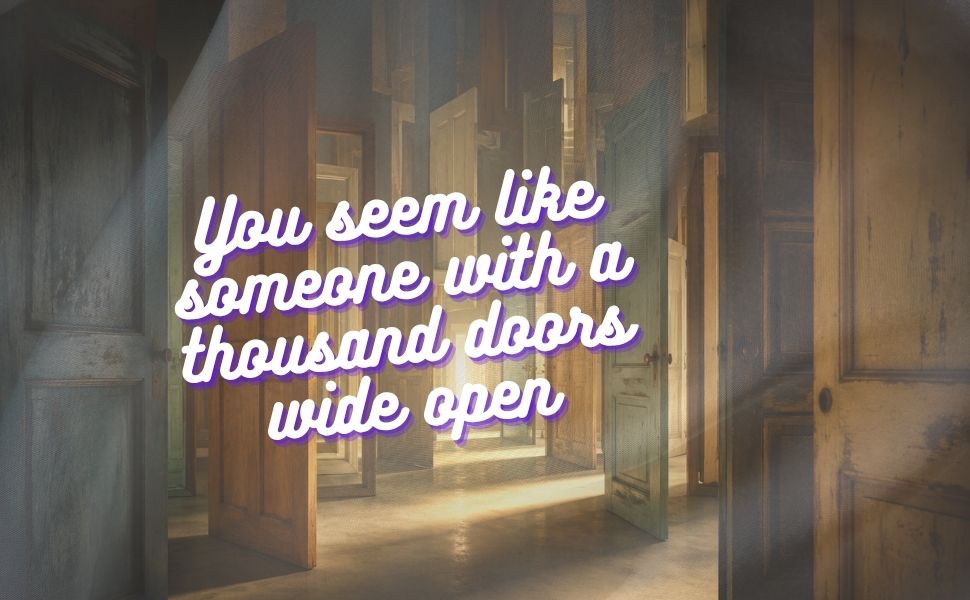
One of the most unforgettable quotes in We Are All Trying Here comes through a surprisingly quiet moment between Byeon Eun-a and Hwang Dong-man:
“You seem like someone with a thousand doors wide open.”
There is no dramatic music in the scene. No emotional breakdown. No grand confession.
Just two exhausted adults sitting together in silence, carrying the invisible weight of lives that did not turn out the way they expected.
And somehow, that is exactly what makes the line hurt so much.
In a drama filled with burnout, insecurity, jealousy, and emotional exhaustion, the “1,000 doors” quote feels bigger than romance. It becomes one of the clearest reflections of adulthood in recent K-dramas.
You may also like:
Why The “1,000 Doors” Quote Hurts So Much
At its core, We Are All Trying Here is not really about success.
It is about people who quietly believe they are running out of time.
Hwang Dong-man has spent nearly 20 years trying to become a film director without ever truly making it. Around him, former classmates and friends move forward with stable careers, recognition, money, and certainty, while he remains trapped between ambition and disappointment.
The drama captures something painfully familiar about modern adulthood:
how easy it is to slowly lose confidence in yourself.
Not through one life-changing tragedy.
But through repetition.
Failed opportunities.
Awkward reunions.
Comparison.
Watching everyone else move forward while you remain emotionally stuck in place.
The brilliance of Byeon Eun-a’s line is that she sees Dong-man differently from how he sees himself.
Society sees failure.
She sees possibility.
The Real Meaning Behind Dong-man’s “1,000 Doors”
The “doors” in the quote are not literal opportunities.
They represent emotional openness.
Each door symbolizes a different part of a person:
dreams, fears, memories, imagination, tenderness, loneliness, hope, regret, and all the versions of life that still exist inside them.
A person with “1,000 doors wide open” is someone who has not completely shut themselves off from the world.
Even after disappointment.
Even after rejection.
Even after years of feeling left behind.
That is what makes Dong-man such a quietly heartbreaking character. Despite his failures, he still feels things deeply. He still notices beauty in small moments. He still longs for connection. He still carries emotional warmth that many people lose while trying to survive adulthood.
And in today’s world, that kind of softness almost feels radical.
Especially for someone who has every reason to become bitter.
The Quiet Tragedy Of Becoming Emotionally Numb
One of the saddest things We Are All Trying Here understands is that adulthood often teaches people to become smaller versions of themselves.
When people are young, life feels endless. Every direction feels possible.
But over time, doors begin to close.
One closes after heartbreak.
Another after failure.
Another after burnout.
Another after humiliation.
Eventually, survival becomes more important than curiosity.
People stop dreaming out loud.
They stop trusting their emotions.
They stop exploring new versions of themselves because vulnerability becomes exhausting.
The tragedy is not always unhappiness.
Sometimes it is numbness.
The drama repeatedly shows characters who are functioning normally on the outside while quietly collapsing inside. That emotional realism is part of what makes Park Hae-young’s writing feel so devastatingly human.
Dong-man stands out because, despite everything, he still has emotional movement inside him.
He still has “1,000 doors” that have not been locked away yet.
Why So Many Viewers Relate To The Quote
A lot of viewers connected instantly to the “1,000 doors” quote because it speaks directly to one of the biggest fears adults carry:
“What if my life is already too late?”
The older people get, the more they feel pressured to become fixed versions of themselves. By a certain age, society expects people to already know who they are, what they want, and where their life is going.
But We Are All Trying Here understands that many adults are still searching.
Still confused.
Still lonely.
Still trying to rebuild confidence after years of disappointment.
That is why the quote feels comforting instead of tragic.
It suggests that a person’s value is not measured only by visible success.
As long as someone still carries curiosity, hope, creativity, tenderness, or emotional honesty inside them, their story is not over yet.
There are still doors left unopened.
Why Eun-a’s Words Feel Like A Form Of Salvation
What makes the scene even more emotional is that Eun-a does not compliment Dong-man for being talented or successful.
She compliments him for remaining open.
That distinction changes everything.
For someone who has spent years feeling useless, being seen this way becomes almost life-saving. Eun-a recognizes something deeply human inside him that the world no longer rewards:
sensitivity.
In many dramas, characters are loved because they are extraordinary.
But We Are All Trying Here finds beauty in unfinished people.
People who are insecure.
People who are lost.
People who are emotionally messy.
People who are still trying to figure out how to live without giving up on themselves completely.
And maybe that is why the “1,000 doors” quote continues to linger with viewers long after the episode ends.
Deep down, most people are afraid that life has already closed too many doors on them.
But the drama quietly suggests something different.
As long as there is still tenderness, curiosity, or hope left inside you, not every door is gone yet.
Read more:
