A poor student takes a job at a Xiangxi guild hall to pay her mother’s hospital bills. One assassination attempt later, she’s the prime suspect, and her only way out is a ten-day deal with the marshal’s son she supposedly tried to kill. That’s how The Lament of Autumn opens, and the Republican-era world around it is half the reason people keep watching.
So where was it actually filmed, and can you visit? Here’s what has been confirmed, what hasn’t, and where in eastern China you can step into the drama’s 1920s atmosphere yourself.
The Lament of Autumn at a Glance (TL;DR)
- Chinese title: 玉簟秋 (Yu Dian Qiu)
- Stars: Cheng Lei (丞磊, also credited as Ryan Cheng) as Yu Changxuan and Xu Ruohan (徐若晗) as Ye Pingjun
- Premiere: October 12, 2026 on Hunan TV and Mango TV
- Where to watch outside China: Rakuten Viki, and Viu in some Asian markets
- Setting: China in the 1920s (the Republican era)
- Where it was filmed: About 140 days on location in Hengdian, Hangzhou, Ningbo and Shanghai, all in eastern China
- Can you visit? The exact sets haven’t been named publicly. Hengdian, the one confirmed studio town, is open to visitors, and Shanghai and Ningbo still have the real 1920s streets the drama recreates
- Best base: Shanghai, with a day trip or overnight in Hengdian
What Is The Lament of Autumn About?
Ye Pingjun, a student working at a guild hall to cover her mother’s medical treatment, is falsely accused in an assassination attempt on Yu Changxuan, the fifth son of the powerful Yu family. She strikes a deal with him: ten days to find the real culprit. The investigation turns into a romance, then a marriage full of suspicion, while Changxuan keeps secrets of his own. That’s how Rakuten Viki’s synopsis sums it up.
The series is adapted from the novel Yu Dian Qiu by Ling Xi (灵希), part of her Republican-era trilogy. Ju Jueliang is the chief director and Wang Hui directs, according to the premiere-day announcement on Tencent News. It airs at 20:30 on Hunan TV’s Golden Eagle Theater, and Mango TV puts each episode online at noon.
Where to watch: Outside China, episodes are streaming on Rakuten Viki. Hong Kong outlet HK01 reports that the drama is also on Viu. Availability varies by country, so check your region.
Where Was The Lament of Autumn Filmed?
Here’s what’s confirmed: the production spent around 140 days shooting on location in Hengdian, Hangzhou, Ningbo and Shanghai, through autumn, winter and spring. Both the Tencent News premiere release and the official schedule announcement on Sohu give the same four cities.
The production also shared a few details about how the drama was made:
- The crew built two main sets to recreate Republican-era architecture, costumes and streets.
- The Xiangxi Guild Hall (湘西会馆), where Ye Pingjun works and the story kicks off, is the signature set, built to show off the glamour of 1920s high society.
- For scenes with a classical Chinese look, the crew filmed in real gardens rather than on a soundstage.
Hengdian is the one place backed by on-set evidence. Fan photos of the cast in costume on the streets of Hengdian circulated in December 2025, mid-shoot.
What isn’t confirmed: which studio lots or which real gardens were used. Neither Mango TV nor the production has named them. Some Chinese entertainment sites list very specific set details, but several of those articles are marked as AI-generated, and one even swaps in a different city, so they’re left out here. The guild hall was a purpose-built set, so it isn’t a building you can tour.
Here’s where you can go: the backlot town where the drama was confirmed to film, and the real 1920s streets in its filming cities.

Neon signs and crowds on Nanjing Road in Shanghai at night Nanjing Road at night. Shanghai was one of the drama’s four filming cities. Photo: BI ravencrow / Pexels
1. Hengdian World Studios, Zhejiang (Confirmed Filming Town)
Hengdian is China’s biggest film-production town, often called “Chinawood,” and the only one of the four locations with visible proof that the cast filmed there. The town is a cluster of themed backlots, and the one built for Republican-era stories is:
- Dream Bund (梦外滩). A reconstruction of 1930s Shanghai’s Bund waterfront with its own ticket, and the closest Hengdian zone to the drama’s old-Shanghai look, according to SetJet China’s Hengdian guide. Adult tickets were listed at ¥185 in a 2025 price list.
Which Hengdian zone The Lament of Autumn used hasn’t been published, so treat Dream Bund as the best match for its era, not a confirmed set. If you’re staying the night, Hengdian’s older Guangzhou Street and Hong Kong Street zone (a 19th-century set) is open into the evening and is one of the liveliest spots after dark.
Tickets (as of October 2026): Most major zones cost around ¥185 to ¥190 for adults. A one-day pass covering all five main ticketed zones starts at about ¥239, per SetJet China. Check the official WeChat mini-program (横店目的地旅游) for current prices.
Getting there: Hengdian Station opened on the Hangzhou to Wenzhou high-speed line in September 2024, making it roughly 45 to 60 minutes from Hangzhou West. From Shanghai, take the train to Yiwu (about 1.5 hours), then the Yidong light rail into Hengdian.
Tip: Foreign visitors need to register their passport at the visitor service center before the first gate. Allow an extra 15 to 20 minutes. Zones sometimes close for filming, so check closure notices a day ahead.
Can you visit? Yes. Hengdian is open year-round, and there’s a fair chance you’ll walk past a crew shooting the next big period drama.

A palace set at Hengdian World Studios. This is one of the town’s imperial-era lots, shown here to give a sense of its scale, not a set from the drama.
2. Shanghai Film Park (Chedun), Songjiang
Shanghai was a confirmed filming city, and Shanghai Film Park is its main Republican-era backlot. This working studio on the city’s southwestern edge recreates 1930s Nanjing Road, shikumen lane houses, an old railway station and the Zhejiang Road steel bridge, and you can ride a vintage-style tram around the lot, per the Shanghai government’s English portal.
It hasn’t been confirmed as a Lament of Autumn location. But if you want to stand on a tram-lined 1930s street like the ones in the drama, this is the place.
Tickets and hours: Adult tickets started at ¥69 (¥89 with the mini train) in a mid-2025 listing, so expect small changes. It’s open 08:30 to 16:30, with last entry around 15:30.
Getting there: It’s at 4915 Beisong Road, Chedun Town, Songjiang District. It’s a long way from downtown, and Klook reviewers recommend a taxi or DiDi over public transport.
Can you visit? Yes, though filming can close off some streets.
3. Nanjing Road East, Shanghai
This is the real street behind every Republican-era drama’s shopping scenes, and its 1920s bones are still standing. Walk from west to east and you’ll pass the great department stores of the era: the curved Art Deco front of the former Sun Company (now No. 1 Department Store), Wing On with its corner clock tower, and the domed former Sincere Company opposite, per Wander in China’s Nanjing Road guide.
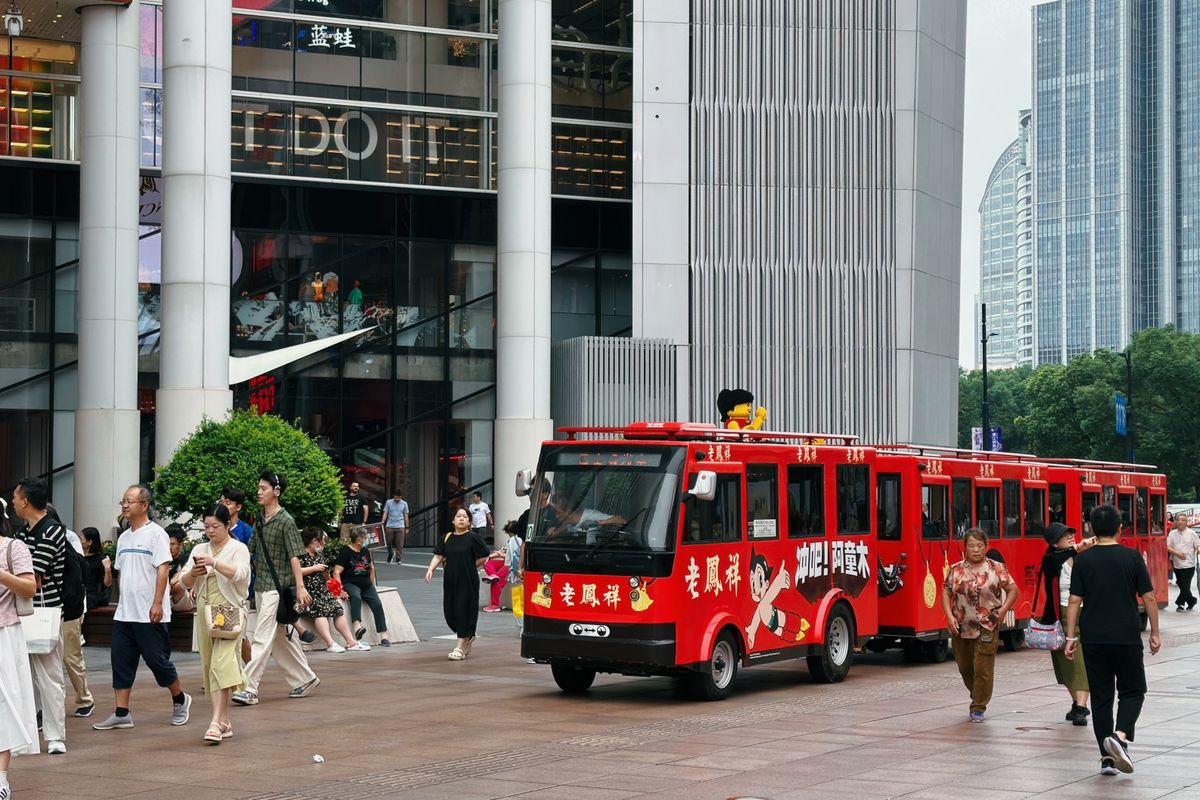
The trams that ran here a century ago are gone. A slow Red Tourist Train now runs along the pedestrian section between West Tibet Road and Henan Road, for ¥10 one way, from 09:30 to 22:00.
Tip: Start around 4:30 pm. The facades catch the late light, the neon comes on at twilight, and you reach the Bund just as it lights up.
Can you visit? Yes, it’s free and open all the time.

Red sightseeing train among pedestrians on a Shanghai shopping street A red sightseeing train on a Shanghai pedestrian street.
4. The Bund and the Peace Hotel, Shanghai
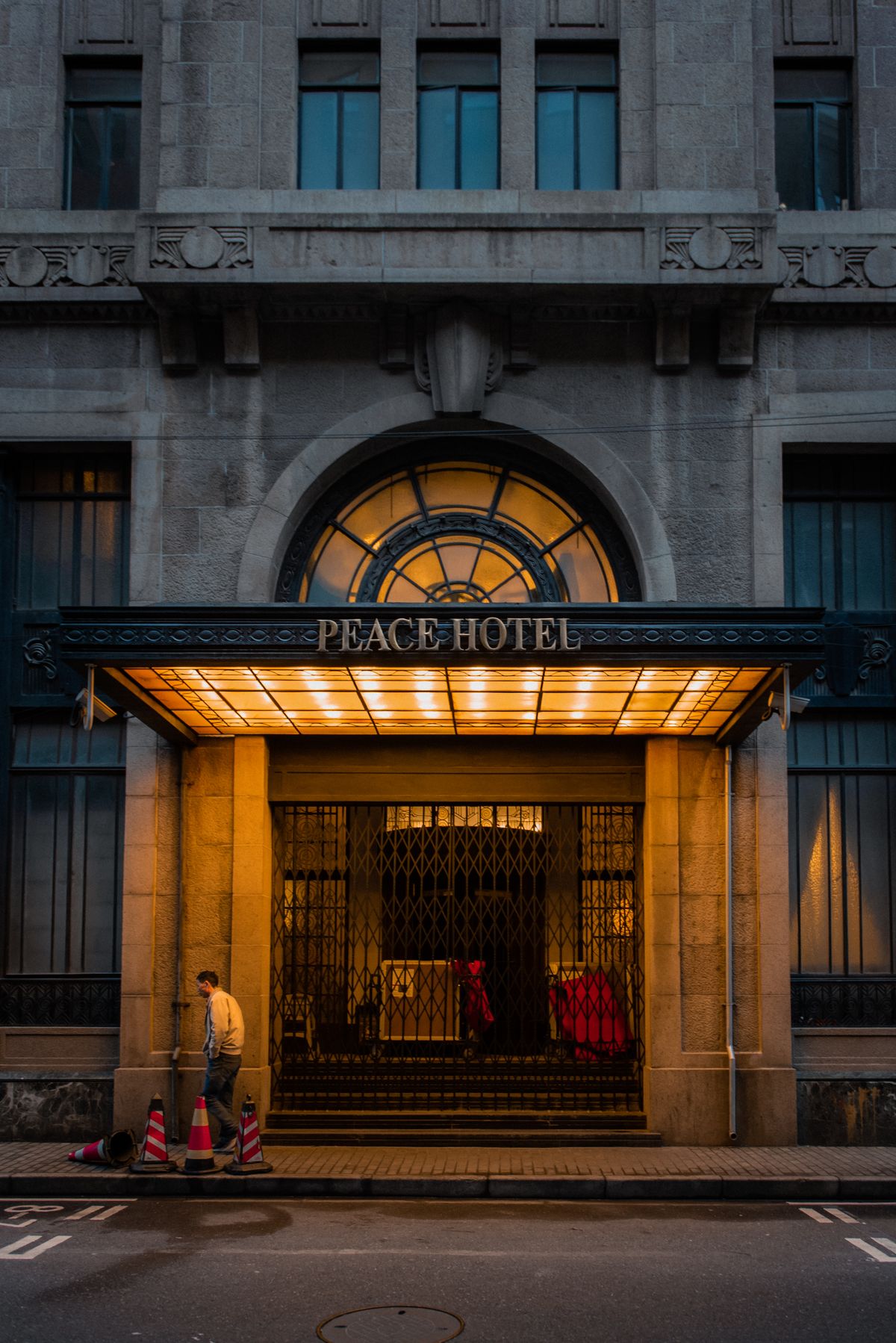
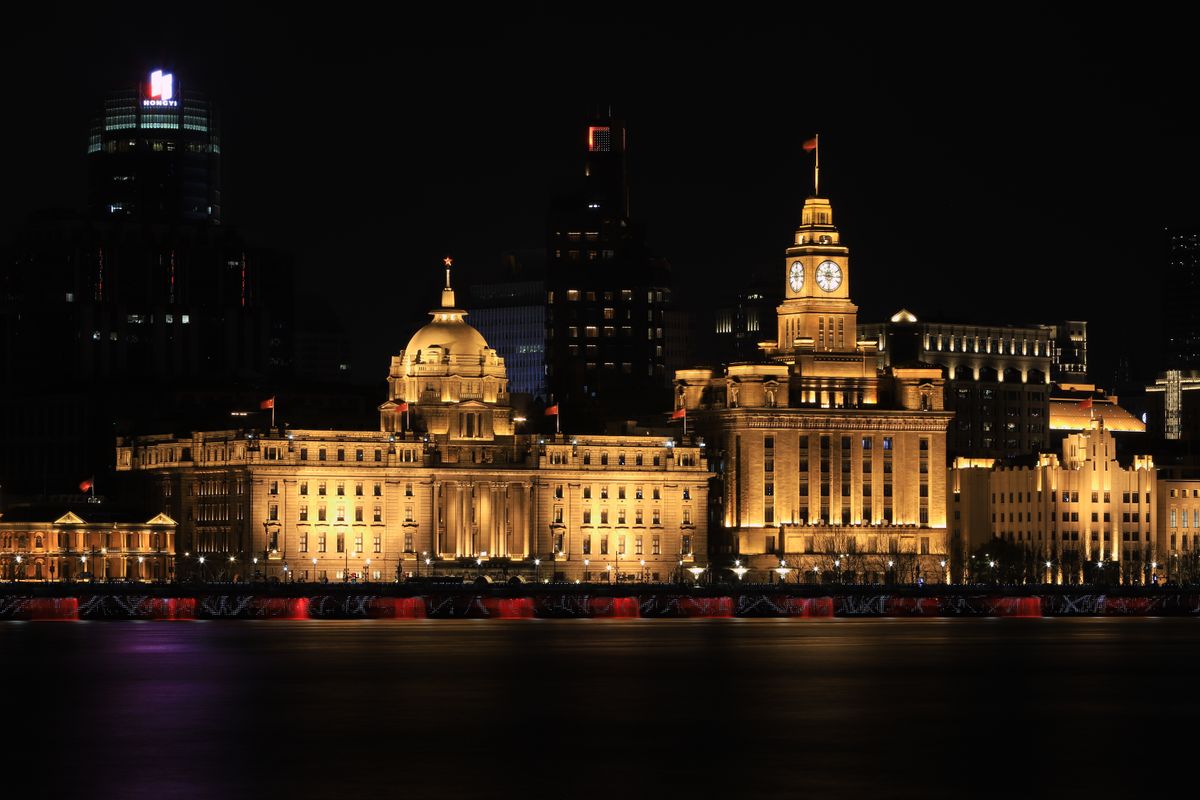
Nanjing Road ends at the Bund, Shanghai’s riverfront line of banks and trading houses, the skyline that Republican-era dramas, Hengdian’s Dream Bund included, keep recreating. The landmark to find is the Peace Hotel, completed in 1929 by Victor Sassoon as the Cathay Hotel. That’s the exact decade The Lament of Autumn is set in.
The Art Deco lobby is free to enter, per Wander in China. Dress neatly and keep your voice down.
Can you visit? Yes. The Bund promenade is free and open all day, and it looks its best at blue hour, about 15 to 30 minutes after sunset.

Warmly lit entrance of the Peace Hotel in Shanghai at night The Peace Hotel’s entrance, opened in 1929 as the Cathay Hotel.

Historic buildings on the Bund in Shanghai illuminated at night The Bund’s historic waterfront at night.
Planning more screen-inspired trips this year? Browse our notable global filming locations for 2026.
5. Ningbo Old Bund (Laowaitan)
Ningbo was another confirmed filming city, and it has a claim most visitors don’t know about: Shanghai’s Bund wasn’t China’s first. Ningbo opened as a treaty port in 1844, and its riverside foreign quarter became “the first Bund in China,” about 20 years before Shanghai’s, according to Wikipedia.
Today the Old Bund, on the north bank of the Yong River, has 54 historic sites, including the former British Consulate, the old Zhejiang Customs house and a Gothic cathedral. It has the same period atmosphere as Shanghai’s Bund, with far fewer crowds.
There’s no confirmed filming spot here. Ningbo is also home to Xiangshan Global Studios, a big backlot with a Republic of China town, but reports don’t say whether the drama used it.
Can you visit? Yes, the Old Bund is free. Ningbo is about 2 hours from Shanghai by high-speed train.
A 3-Day Lament of Autumn Route
- Day 1, Shanghai: Walk Nanjing Road East in the late afternoon, then see the Bund and the Peace Hotel lobby at blue hour.
- Day 2, Shanghai and Hengdian: Morning at Shanghai Film Park in Chedun, then the train to Hengdian (via Yiwu, or via Hangzhou if you want a West Lake stop). Spend the evening in Hengdian’s night-time zone.
- Day 3, Hengdian: Dream Bund in the morning, one more zone if you have energy, then the train back to Shanghai.
Got an extra day? Add Ningbo’s Old Bund, an easy round trip from Shanghai.
Practical Tips for a China Trip
- Visas: China has widened visa-free entry for many nationalities in 2025 and 2026, and travelers from other countries can often use 240-hour visa-free transit with an onward ticket. The rules change often, so check China Briefing’s up-to-date guide or your nearest Chinese embassy before booking.
- Payments: China runs on Alipay and WeChat Pay. Set one up with an international card before you fly.
- Staying connected: Many foreign apps and sites are blocked on local SIM and Wi-Fi networks, so a travel eSIM with built-in roaming is the easiest way to keep Google Maps, Instagram and Viki working.
- Trains: Book high-speed rail early around Chinese public holidays. Your passport is your ticket.
- Studio closures: Hengdian and Chedun are working studios, and streets can close for filming with little notice.
FAQ
Where was The Lament of Autumn filmed?
The drama spent about 140 days shooting on location in Hengdian, Hangzhou, Ningbo and Shanghai in eastern China, according to the official premiere announcement. Fan photos confirm that the cast filmed on the streets of Hengdian.
Can you visit The Lament of Autumn filming sets?
The exact sets haven’t been named. You can visit Hengdian World Studios, the confirmed filming town, and its Dream Bund zone recreates 1930s Shanghai. Shanghai Film Park also has a 1930s Nanjing Road set that’s open to visitors.
Is the Xiangxi Guild Hall a real place?
No. The Xiangxi Guild Hall was built as a set for the drama. For real 1920s architecture, visit Shanghai’s Peace Hotel or Ningbo’s Old Bund.
Is The Lament of Autumn set in Shanghai?
The story takes place in Republican-era China in the 1920s, and its city streets are clearly inspired by old Shanghai. Shanghai was also one of the real filming cities.
Where can I watch The Lament of Autumn with English subtitles?
It’s streaming on Rakuten Viki, and it’s also on Viu in some Asian markets. In China, it airs on Hunan TV and streams on Mango TV.
Is The Lament of Autumn based on a novel?
Yes. It’s adapted from Yu Dian Qiu (玉簟秋) by Ling Xi, part of her Republican-era trilogy.