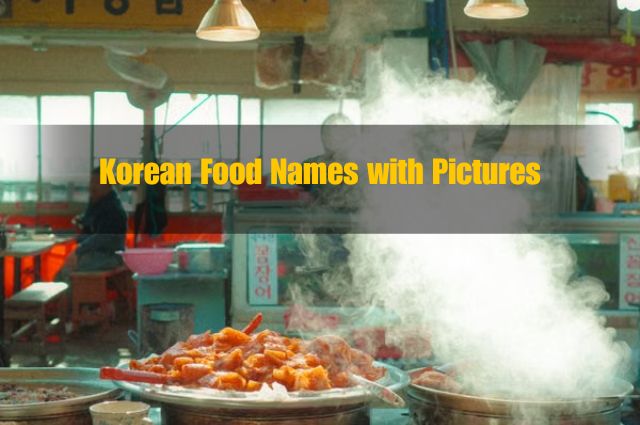
You sit down in a busy little restaurant in Seoul, the menu on the wall is all Hangul, and the only clue is a faded photo of something red and bubbling. Is it a stew? A soup? Is it going to set your mouth on fire?
This guide fixes that. Below are 50 Korean dishes with pictures, their names in Hangul, how to say them, what they actually taste like and how spicy they are, plus the K-dramas where you’ve probably seen them. Point, order and eat with confidence.
Korean Food at a Glance (TL;DR):
- Best first dishes if you don’t like spicy food: bulgogi, galbi, japchae, gimbap, samgyetang, seolleongtang and jajangmyeon.
- Most famous dishes: kimchi, bibimbap, Korean BBQ (samgyeopsal, galbi), tteokbokki and Korean fried chicken.
- Visiting this winter? Street stalls fire up once the weather turns cold. Look for hotteok, bungeoppang and steaming fish cake skewers (eomuk).
- What visitors are buying right now: gimbap and ramyeon. Foreign visitors’ gimbap purchases at CU convenience stores jumped 231% in July and August 2025, during the KPop Demon Hunters craze (Asia News Network).
- Typical prices in Seoul: gimbap about ₩3,800, a kimchi stew set meal about ₩8,650, bibimbap about ₩11,600, 200 g of grilled pork belly about ₩21,200 (Korea Consumer Agency, March 2026).
- Good to know: side dishes (banchan) are free and refillable. Korean BBQ restaurants often ask you to order at least two portions.
In this guide: How to read a Korean menu · Rice dishes · Noodles · Soups and stews · Korean BBQ and meat · Seafood · Street food · Pancakes · Side dishes · Desserts and drinks · Convenience store food · Prices · Where to eat what · Useful phrases · FAQ
How to Read a Korean Menu (the 2-Minute Decoder)
Most Korean dish names are built from a main ingredient plus a word that tells you how it’s cooked. Learn these endings and half the menu suddenly makes sense.
| Ending | Hangul | Means | Example |
|---|---|---|---|
| -bap | 밥 | rice | bibimbap, gimbap |
| -myeon / guksu | 면 / 국수 | noodles | naengmyeon, kalguksu |
| -guk / -tang | 국 / 탕 | soup (tang is usually richer, longer-boiled) | miyeokguk, samgyetang |
| jjigae | 찌개 | stew, thicker and saltier than soup | kimchi jjigae |
| -jeon | 전 | savory pancake or pan-fried dish | pajeon |
| -gui | 구이 | grilled | saengseon-gui (grilled fish) |
| -bokkeum | 볶음 | stir-fried | jeyuk bokkeum (spicy pork) |
| -jjim | 찜 | braised or steamed | jjimdak |
| muchim | 무침 | seasoned, mixed (often a side dish) | kongnamul muchim |
| bibim- | 비빔 | mixed | bibim naengmyeon |
| maeun | 매운 | spicy | maeun tteokbokki |
About spelling: Korean is written in Hangul, and English spellings vary. The official system (Revised Romanization) gives you gimbap and tteokbokki, but you’ll also see kimbap and dukbokki on menus and packaging. They’re the same food. This guide uses the official spelling first (except kimchi, which is already an English word).
About the “Say it” lines: they’re simple English approximations, not perfect Korean. Read them the way they’re spelled. Doubled letters (jj, tt, kk, pp, ss) mean a tighter, sharper sound, a bit like the “t” in “stop” rather than in “top”.
Spice scale used below: None · Mild · Medium · Hot.
Korean Rice Dishes (밥)
1. Bibimbap (비빔밥)
Say it: BEE-bim-bahp · Spice: Mild (you add the gochujang)
Rice topped with seasoned vegetables, often beef, and a fried or raw egg, with a spoonful of gochujang (red chili paste) on the side. Bibim means “mixed”, so stir everything together before you eat. Order dolsot bibimbap and it comes in a sizzling stone bowl that crisps the rice at the bottom. The city of Jeonju is famous for it.

2. Gimbap (김밥)
Say it: GEEM-bahp · Spice: None
Rice and fillings (egg, spinach, carrot, yellow pickled radish, ham or tuna) rolled in seaweed and sliced. It looks like sushi, but the rice is seasoned with sesame oil, not vinegar, and there’s usually no raw fish. It’s Korea’s go-to picnic and road-trip food, and since KPop Demon Hunters it has become a must-try for visitors. Look for the mini mayak gimbap at Gwangjang Market in Seoul.
Seen in: Healer, where Jo Min-ja is obsessed with making it (Burpple).

3. Kimchi Bokkeumbap (김치볶음밥)
Say it: KIM-chee BOH-kkum-bahp · Spice: Mild to Medium
Kimchi fried rice, usually with a little pork or Spam and a fried egg on top. It’s the dish Koreans make at home when the kimchi gets sour, and a common “finish” at dakgalbi restaurants.
Seen in: Fight for My Way, when Ae-ra makes fried rice for Dong-man (Burpple).

4. Gukbap (국밥)
Say it: GOOK-bahp · Spice: None (add chili to taste)
Literally “soup rice”: a hearty bowl of broth served with rice to tip in. In Busan, the classic is dwaeji gukbap (pork). Elsewhere you’ll find sundae gukbap (with Korean sausage). Cheap, filling and often served 24 hours a day.
Korean Noodles (면)
5. Naengmyeon (냉면)
Say it: NENG-myun · Spice: None (mul) / Medium (bibim)
Chewy buckwheat noodles served ice cold. Mul naengmyeon comes in a tangy, chilled beef broth. Bibim naengmyeon is dressed in a sweet-spicy chili sauce instead. The noodles are long, so staff often snip them with scissors at the table. A summer favorite, but Koreans eat it all year. Busan has its own wheat-noodle version called milmyeon.

6. Jajangmyeon (짜장면)
Say it: JAH-jahng-myun (most Koreans say JJAH-, which is why you’ll also see jjajangmyeon) · Spice: None
Thick wheat noodles in a glossy black bean sauce with pork and onion. It’s Korean-Chinese comfort food, the classic delivery order on moving day, and what singles eat on Black Day (April 14). Both spellings are correct in Korean today.
Seen in: Coffee Prince, in Go Eun-chan’s black-noodle eating contest (Burpple).

7. Jjamppong (짬뽕)
Say it: JJAHM-ppong · Spice: Hot
Jajangmyeon’s spicy partner: noodles in a fiery red broth loaded with mussels, squid and vegetables. Can’t decide? Many restaurants sell jjamjjamyeon, a split bowl with half of each.

8. Kalguksu (칼국수)
Say it: KAHL-gook-soo · Spice: None
“Knife noodles”: soft, hand-cut wheat noodles in a light anchovy, clam or chicken broth. A cozy, mild bowl and a favorite at the noodle counters of Gwangjang Market.

9. Ramyeon (라면)
Say it: RAH-myun · Spice: Medium to Hot
Korea’s take on instant noodles, usually spicier and chewier than other versions. Koreans cook it in a small pot and crack an egg in. Try it the local way at a Han River convenience store, where instant-ramyeon cooking machines let you make your own bowl.
In Korea, ramyeon also has a second meaning. “Do you want to eat ramyeon (before you go)?” is a flirty invitation, a joke usually traced back to the 2001 film One Fine Spring Day and replayed in many dramas since (SCMP).
Seen in: What’s Wrong with Secretary Kim? and Crash Landing on You (same source).
10. Japchae (잡채)
Say it: JAHP-cheh · Spice: None
Glassy sweet potato noodles stir-fried with vegetables, beef, soy sauce and sesame oil. Slightly sweet and very easy to love. It’s a holiday and party dish, and often shows up as a side dish too.

Korean Soups and Stews (국 · 탕 · 찌개)

11. Kimchi Jjigae (김치찌개)
Say it: KIM-chee JJEE-geh · Spice: Medium
The everyday stew of Korea: well-fermented kimchi simmered with pork (or tuna), tofu and green onion. Sour, savory and warming. It usually comes as a set meal (baekban) with rice and side dishes, which makes it one of the best-value meals in the country.

12. Doenjang Jjigae (된장찌개)
Say it: DWEN-jahng JJEE-geh · Spice: Mild
An earthy stew made with doenjang (fermented soybean paste), tofu, zucchini and onion. Think of it as a heartier cousin of miso soup. At BBQ restaurants, order it at the end of the meal with a bowl of rice.
13. Sundubu Jjigae (순두부찌개)
Say it: SOON-doo-boo JJEE-geh · Spice: Medium to Hot
Silky soft tofu in a spicy broth, served boiling in a stone pot. Crack the raw egg into it straight away so it cooks in the heat. In Gangneung’s Chodang village, the specialty is a mild, white version of the same tofu.

14. Budae Jjigae (부대찌개)
Say it: BOO-deh JJEE-geh · Spice: Medium
“Army base stew” was born after the Korean War, when ham, sausages and canned beans from US bases made their way into Korean kitchens. Today it’s a big shared pot of ham, sausage, kimchi, tofu, instant noodles and a slice of cheese. Uijeongbu, north of Seoul, is its hometown.
15. Samgyetang (삼계탕)
Say it: SAHM-gyeh-tahng · Spice: None
A whole young chicken stuffed with sticky rice, ginseng, jujube and garlic, simmered until the meat falls off the bone. Koreans eat it on the hottest days of summer (boknal) to “fight heat with heat”. Season it yourself with the salt and pepper on the table.

16. Seolleongtang (설렁탕)
Say it: SUL-lung-tahng · Spice: None
A milky-white soup made by boiling ox bones for hours, served with thin slices of beef and soft noodles. It arrives unseasoned on purpose: add salt and chopped green onion, and eat it with radish kimchi.
17. Gamjatang (감자탕)
Say it: GAHM-jah-tahng · Spice: Medium
Meaty pork backbones and potatoes stewed in a spicy broth with perilla seeds and leaves. Pick the bones up and dig in. It’s a late-night favorite, and spending on it by foreign visitors rose 44% year on year in July 2025, according to the Korea Tourism Organization (Korea JoongAng Daily).

18. Miyeokguk (미역국)
Say it: MEE-yuk-gook · Spice: None
A light seaweed soup, usually with beef. It’s the soup Koreans eat on their birthday, and the one traditionally given to new mothers.

19. Tteokguk (떡국)
Say it: TTUK-gook · Spice: None
Sliced rice cakes in a clear beef broth, topped with egg and seaweed. It’s the dish for Seollal (Lunar New Year), and tradition says each bowl makes you a year older.
Korean BBQ and Meat Dishes (고기)
Planning a food-focused trip? Read more: Best K-drama filming locations in Seoul
20. Samgyeopsal (삼겹살)
Say it: SAHM-gyup-sahl · Spice: None
Thick slices of pork belly grilled at your table. Wrap a piece in lettuce with garlic, ssamjang (dipping paste) and kimchi, and eat it in one bite. With a bottle of soju, it’s the most classic night out in Korea.
Seen in: Weightlifting Fairy Kim Bok-joo, where Bok-joo teaches her teammates how to eat a full Korean BBQ course (Burpple).

21. Galbi (갈비)
Say it: GAHL-bee · Spice: None
Marinated short ribs, either beef (so-galbi) or pork (dwaeji-galbi), grilled over charcoal. Sweet, smoky and a safe pick for anyone nervous about spice. Suwon is famous for its big beef galbi.

22. Bulgogi (불고기)
Say it: BOOL-go-gee · Spice: None
Thin slices of beef marinated in soy sauce, sugar, garlic and sesame oil, then grilled or cooked in a pan. Often the first Korean dish people fall for, and a great one for kids.

23. Jeyuk Bokkeum (제육볶음)
Say it: JEH-yook BOH-kkum · Spice: Medium
Thin slices of pork stir-fried in a sweet, spicy gochujang sauce with onion and green onion. It’s one of the most popular lunch dishes for Korean office workers, served with rice and side dishes, and great wrapped in lettuce.

24. Dakgalbi (닭갈비)
Say it: DAHK-gahl-bee · Spice: Medium
Chicken stir-fried in a big iron pan at the table with spicy sauce, cabbage, sweet potato and rice cakes. Leave a little in the pan and ask for fried rice at the end. The city of Chuncheon is the dakgalbi capital.

25. Jjimdak (찜닭)
Say it: JJIM-dahk · Spice: Mild
Chicken braised in a sweet-salty soy sauce with glass noodles, potatoes and a few dried chilies. Originally from Andong, it’s a great sharing dish for groups.
26. Jokbal (족발)
Say it: JOHK-bahl · Spice: None
Pig’s trotters braised in soy sauce and spices, then sliced and served cool. The skin is gelatinous, the meat tender. Popular with drinks or as a delivery dinner. Seoul’s Jangchung-dong has a whole street of jokbal restaurants.

27. Bossam (보쌈)
Say it: BOH-ssahm · Spice: Mild
Tender boiled pork belly, sliced and wrapped in cabbage leaves with spicy shredded radish. It’s the traditional treat for families after a day of making winter kimchi.

28. Gopchang (곱창)
Say it: GOHP-chahng · Spice: None to Medium
Grilled beef or pork small intestines: rich, chewy and a little crispy. It’s a soju-night dish that adventurous eaters love. In Daegu, look for the local relative, makchang.

29. Korean Fried Chicken (치킨)
Say it: CHEE-kin · Spice: None (plain) / Mild to Medium (yangnyeom)
Double-fried so it stays crunchy. Order huraideu (plain fried), yangnyeom (sticky sweet-spicy glaze) or ganjang (soy garlic). Fried chicken with beer is called chimaek, a craze boosted overseas by My Love from the Star.
Seen in: My Love from the Star, Start-Up, and Crash Landing on You, where Captain Ri feeds Se-ri a drumstick (Tatler Asia).

Korean Seafood (해산물)
30. Hoe (회)
Say it: HWEH · Spice: None (the dipping sauce can be spicy)
Korean-style sliced raw fish, usually eaten wrapped in lettuce with garlic, chili and chojang (sweet-sour chili sauce). The fun way to eat it: pick a live fish at a market such as Jagalchi in Busan or Noryangjin in Seoul, then have it sliced and served upstairs. In Pohang, try mulhoe, a cold, spicy raw fish soup.

31. Ganjang Gejang (간장게장)
Say it: GAHN-jahng GEH-jahng · Spice: None
Raw crab marinated in a soy sauce brine until the meat turns silky and sweet. Koreans call it bap-doduk, a “rice thief”, because you’ll keep ordering more rice. Mix the rice into the crab shell with the leftover roe and sauce. There’s also a spicy version, yangnyeom gejang.

32. Sannakji (산낙지)
Say it: SAHN-nahk-jee · Spice: None
Baby octopus, chopped up raw and served so fresh the pieces still wriggle on the plate. It’s seasoned with sesame oil and sesame seeds. Brave travelers try it at seafood markets. Chew thoroughly: the suckers can stick to your mouth and throat, so it’s not one to rush.
Korean Street Food (길거리 음식)
33. Tteokbokki (떡볶이)
Say it: TTUK-boh-kkee · Spice: Medium to Hot
Chewy cylinder rice cakes and fish cakes in a sweet, spicy, sticky gochujang sauce. The king of Korean street food. Try the creamy rosé tteokbokki if you want less heat. Order it with sundae and fried snacks and you’ve got the combo Koreans call tteok-twi-sun.
Seen in: Romance Is a Bonus Book, where Eun-ho and Dan-i kiss over a plate of it (Tatler Asia), and Oh My Venus.

34. Eomuk / Odeng (어묵 / 오뎅)
Say it: UH-mook / OH-deng · Spice: None
Fish cake folded onto skewers and simmered in broth. Pay per skewer, and help yourself to a paper cup of the hot broth. It’s the perfect winter street snack.


35. Sundae (순대)
Say it: SOON-deh · Spice: None
Not ice cream. Sundae is a Korean sausage stuffed with glass noodles and pig’s blood, steamed and sliced. It tastes mild and slightly earthy. Dip it in salt, or dunk it in tteokbokki sauce.
36. Hotteok (호떡)
Say it: HOH-ttuk · Spice: None
A crispy, chewy pancake filled with brown sugar, cinnamon and nuts. Take small bites: the syrup inside is molten. Busan’s version, ssiat hotteok, is stuffed with seeds.
37. Bungeoppang (붕어빵)
Say it: BOONG-uh-ppahng · Spice: None
A fish-shaped waffle filled with sweet red bean paste (or custard). It only appears when the weather turns cold, so it’s a sure sign of winter in Korea. Head or tail first? Koreans have strong opinions.
Seen in: Vincenzo, as a snack Vincenzo and Cha-young share (Tatler Asia).

38. Korean Corn Dog (핫도그)
Say it: HAHT-doh-geu · Spice: None
A sausage, mozzarella or both on a stick, coated in batter (sometimes with potato cubes), fried, rolled in sugar and drizzled with ketchup and mustard. Sweet and salty in one.
Seen in: Start-Up, where Dal-mi’s grandmother runs a corn dog stall (Tatler Asia).

39. Mandu (만두)
Say it: MAHN-doo · Spice: None (kimchi mandu: Mild)
Dumplings filled with pork, tofu, vegetables or kimchi. Jjin mandu are steamed, gun mandu are pan-fried. Visitors’ spending on noodles and dumplings rose 55.2% year on year in July 2025 (Korea JoongAng Daily).

Korean Pancakes (전)
40. Haemul Pajeon (해물파전)
[IMAGE: haemul-pajeon-seafood-scallion-pancake.jpg | Alt: ]
Say it: HEH-mool PAH-jun · Spice: None
A crispy pancake packed with green onions and seafood, dipped in soy-vinegar sauce. On rainy days, Koreans crave pajeon and makgeolli. Some say the sizzle in the pan sounds like rain.

41. Bindaetteok (빈대떡)
Say it: BIN-deh-ttuk · Spice: None
A thick, extra-crispy pancake made from ground mung beans, with pork and kimchi. Watch them being ground and fried fresh at Gwangjang Market in Seoul.

Korean Side Dishes (반찬)
Every Korean meal comes with banchan, small free side dishes you can refill. Here are the ones you’ll see most.
42. Kimchi (김치)
Say it: KIM-chee · Spice: Medium
Napa cabbage fermented with chili flakes, garlic, ginger and fish sauce. Fresh kimchi is crunchy; aged kimchi is sour and perfect for stews. Kimjang, the tradition of making kimchi together for winter, is on UNESCO’s Intangible Cultural Heritage list.

43. Kkakdugi (깍두기)
Say it: KKAHK-doo-gee · Spice: Mild to Medium
Crunchy cubes of radish kimchi. It’s the must-have partner for seolleongtang and gukbap.

44. Gyeran-mari (계란말이)
Say it: GYEH-rahn-mah-ree · Spice: None
A rolled omelet with finely chopped vegetables, sliced into rounds. Mild, fluffy and loved by kids.

45. Kongnamul Muchim (콩나물무침)
Say it: KOHNG-nah-mool MOO-chim · Spice: None to Mild
Soybean sprouts seasoned with sesame oil, garlic and salt (sometimes chili). Crunchy, nutty and one of the most common banchan in Korea.

Korean Desserts and Drinks (디저트 · 음료)
46. Patbingsu (팥빙수)
Say it: PAHT-bing-soo · Spice: None
Fluffy shaved milk ice topped with sweet red beans and rice cakes. Today you’ll also find mango, strawberry and injeolmi (roasted soybean powder) versions. A summer classic that many cafés serve all year.

47. Yakgwa (약과)
Say it: YAHK-gwah · Spice: None
A flower-shaped cookie fried and soaked in honey and ginger syrup. It’s an old-fashioned treat that has made a big comeback with younger Koreans. Visitors are catching on too: spending on traditional snacks such as tteok and hangwa jumped 76.9% in July 2025, helped by a viral “honey rice cake cereal” trend (Korea JoongAng Daily).
48. Dalgona (달고나)
Say it: DAHL-goh-nah · Spice: None
Melted sugar and baking soda, pressed flat with a shape stamped in the middle. Made famous around the world by Squid Game. Street vendors in tourist areas still make it in front of you.

49. Sikhye (식혜)
Say it: SHIK-hyeh · Spice: None
A sweet, chilled rice drink with soft grains floating on top. It’s the classic drink at a jjimjilbang (Korean bathhouse), next to a pair of baked eggs.
50. Makgeolli and Soju (막걸리 · 소주)
Say it: MAHK-gul-lee / SOH-joo · Spice: None
Makgeolli is a milky, lightly fizzy rice wine, best with pancakes. Soju is the clear spirit that goes with Korean BBQ. Pour for others, not yourself, and turn your head slightly when drinking with elders.
Seen in: Vincenzo, after Vincenzo and Cha-young work through several bottles of makgeolli (Tatler Asia).

Bonus: Korean Convenience Store Food
Don’t skip the convenience store. Foreign visitors made about 13 million card transactions at Korean convenience stores in the first seven months of 2025, more than any other food category in a Korea Tourism Organization analysis (Korea Herald via Asia News Network). Ramyeon was the most-mentioned convenience store food on foreign social media.
Grab these:
- Samgak gimbap (삼각김밥): triangle rice balls wrapped in seaweed. Pull tab 1, then 2, then 3.
- Dosirak (도시락): boxed meals with rice, meat and side dishes, microwaved on the spot.
- Cup ramyeon: use the hot water machine and eat at the window counter.
- Banana milk (바나나맛우유): the iconic squat yellow bottle, and Ji Eun-tak’s favorite drink in Goblin (Tatler Asia).
Choose Korea eSIM / data plan, so you can use Papago’s camera translation on menus
How Much Does Korean Food Cost? (Seoul Prices).
Average prices for popular dishes in Seoul in March 2026, from the Korea Consumer Agency’s price portal (Insight):
| Dish | Average price in Seoul |
|---|---|
| Gimbap (1 roll) | ₩3,800 |
| Jajangmyeon | ₩7,692 |
| Kimchi jjigae set meal | ₩8,654 |
| Kalguksu | ₩10,038 |
| Bibimbap | ₩11,615 |
| Naengmyeon | ₩12,538 |
| Samgyetang | ₩18,154 |
| Samgyeopsal (200 g) | ₩21,218 |
March 2026 data, the latest complete set we could find when this guide was written in October 2026. Prices in Seoul have been rising every year, so expect slightly more, especially in tourist areas like Myeongdong. Street food snacks such as eomuk, hotteok and bungeoppang usually cost a few thousand won.
Where to Eat What: Korea’s Regional Specialties
Many Korean dishes are tied to a city. If you’re traveling beyond Seoul, these are worth the detour.
| Where | Eat this | Read more |
|---|---|---|
| Seoul (Gwangjang Market) | Bindaetteok, mayak gimbap, kalguksu | |
| Jeonju | Bibimbap | Jeonju K-drama filming locations |
| Busan | Dwaeji gukbap, milmyeon, ssiat hotteok, hoe at Jagalchi Market | Things to do in Busan |
| Pohang | Mulhoe (cold raw fish soup), gwamegi (half-dried fish, a winter specialty) | Things to do in Pohang for K-drama fans |
| Suwon | Suwon galbi | Best things to do in Suwon |
| Chuncheon | Dakgalbi | Gangwon-do in winter |
| Gangneung | Chodang sundubu (soft tofu) | Gangwon-do in winter |
| Andong | Jjimdak | |
| Daegu | Makchang | Things to do in Daegu |
| Uijeongbu | Budae jjigae | |
| Jeju | Black pork BBQ (heuk-dwaeji) | Things to do in Jeju |
Explore Korean cooking class in Seoul (make kimchi, bibimbap, japchae)]
Useful Korean Phrases for Ordering Food
| English | Korean | Say it |
|---|---|---|
| Excuse me! (to call staff) | 저기요! | JUH-gee-yo |
| This one, please | 이거 주세요 | EE-guh joo-seh-yo |
| Two portions, please | 2인분 주세요 | EE-in-boon joo-seh-yo |
| Less spicy, please | 덜 맵게 해주세요 | DUL maep-kkeh heh-joo-seh-yo |
| Not spicy, please | 안 맵게 해주세요 | AHN maep-kkeh heh-joo-seh-yo |
| More side dishes, please | 반찬 더 주세요 | BAHN-chahn duh joo-seh-yo |
| Takeout, please | 포장해 주세요 | POH-jahng-heh joo-seh-yo |
| The bill, please | 계산해 주세요 | GYEH-sahn-heh joo-seh-yo |
| It’s delicious! | 맛있어요! | mah-SHEE-ssuh-yo |
Tips: there’s no tipping in Korean restaurants. Water is usually free and self-service. Many places have a call button on the table, so you don’t even need jeogiyo.
Planning your trip around the seasons? Read more: South Korea in November
FAQ: Korean Food Names
What is the most popular Korean food?
Kimchi is the most iconic, eaten with almost every meal. For visitors, the most popular dishes are Korean BBQ (samgyeopsal and galbi), bibimbap, tteokbokki, Korean fried chicken, gimbap and ramyeon.
What Korean food is not spicy?
Bulgogi, galbi, samgyeopsal, japchae, gimbap, jajangmyeon, kalguksu, samgyetang, seolleongtang, ganjang gejang, gyeran-mari, mandu and hotteok are all mild or not spicy at all.
Is it gimbap or kimbap?
Both. Gimbap follows the official romanization, while kimbap is an older spelling still common on menus and packaging. The same goes for tteokbokki and dukbokki.
What is the difference between jjigae, guk and tang?
Guk is a lighter soup, tang is usually a richer soup boiled longer (often with bones), and jjigae is a thicker, saltier stew meant to be eaten with rice.
What Korean food do you see most in K-dramas?
Ramyeon, fried chicken with beer (chimaek), tteokbokki, soju with grilled pork belly, and jajangmyeon show up again and again. Look for the “Seen in” notes above for specific dramas.
What should I eat first in Korea?
Start with Korean BBQ (samgyeopsal), a kimchi jjigae set meal, gimbap and tteokbokki from a street stall. Together they cover the flavors Korea is known for.
Is Korean food vegetarian-friendly?
It can be, but ask. Many soups and stews use anchovy or beef stock, and most kimchi contains fish sauce. Bibimbap without meat (and without egg, for vegans), japchae without beef, and temple food restaurants are good options.
How much does a meal cost in Korea?
In March 2026, a gimbap roll in Seoul averaged about ₩3,800, a kimchi stew set meal about ₩8,650 and bibimbap about ₩11,600. Korean BBQ costs about ₩21,000 per 200 g portion of pork belly, and many places require at least two portions.
What do Koreans eat for breakfast?
Traditionally rice, soup and side dishes, the same as other meals. Today many people grab toast, gimbap or a convenience store meal instead.
