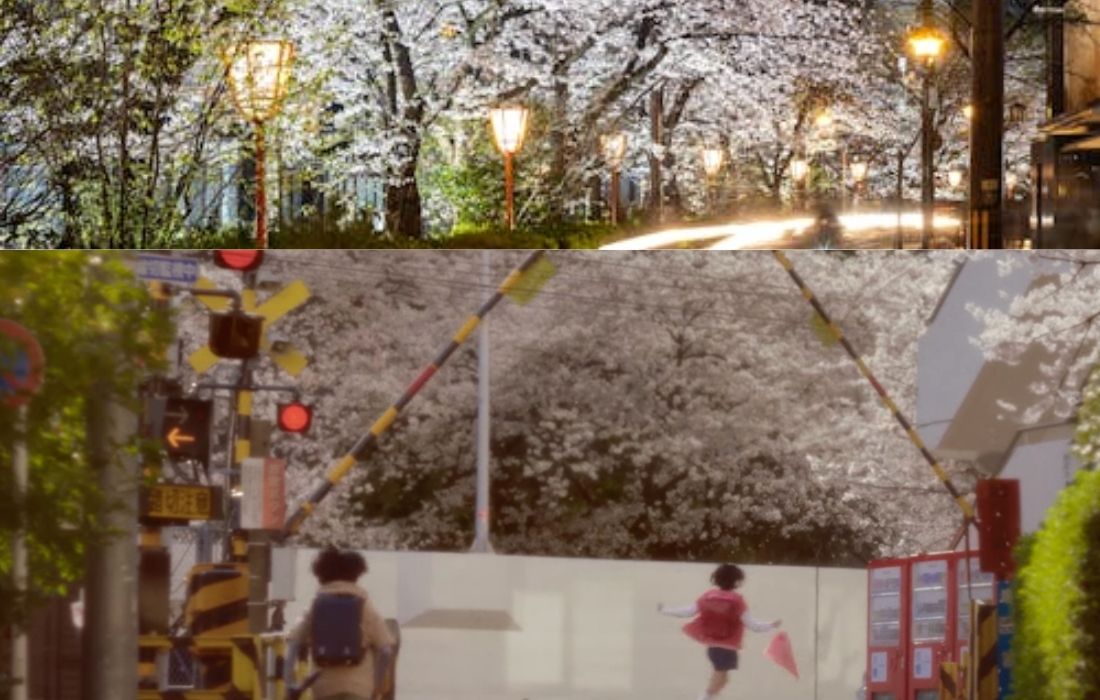
Many years ago, after closing the final page of this story, I carried a quiet wish in my heart: to become the main character for a moment, and to step into a real Japan shaped by time, distance, and falling petals.
Not just to watch it on screen, but to walk its streets.
To stand by the railway tracks.
To wait on a snow-covered platform.
To look up at the same sky where a rocket once disappeared, carrying unspoken feelings with it.
The live-action adaptation of 5 Centimeters per Second in 2026 finally made that dream feel possible. It turned memory into geography, emotion into coordinates, and longing into a journey you can actually take.
TL;DR – Real Places You Can Visit from 5 Centimeters per Second (2026)
- Sangubashi Train Crossing, Tokyo: The iconic final scene where time, trains, and missed connections intersect.
- Iwafune Station, Tochigi: The snow-covered rural station from the winter chapter, frozen in waiting and silence.
- Suburban Tokyo Rail Lines & Neighborhoods: Where Takaki grows up, works, and quietly drifts through adulthood.
- Tanegashima Island, Kagoshima: The “Cosmonaut” chapter, filmed near the JAXA Space Center and endless blue skies.
- Cherry Blossom Parks in Western Tokyo: Spring memories, first love, and petals falling at five centimeters per second.
From here, the story unfolds not just as a film guide, but as a cinematic travel diary—one that follows the rhythm of seasons, trains, and the fragile distance between two hearts slowly growing apart.
Tokyo in Spring: Where Trains and Time Intersect
The heart of 5 Centimeters per Second has always belonged to Tokyo’s railway lines. In the live-action film, the production team chose to recreate the iconic final scene at a real suburban crossing near Sangubashi, in Shibuya. It is not a famous landmark. There are no neon signs or observation decks. Just a narrow road, steel rails, warning bells, and the ordinary rhythm of commuter trains passing through.
And yet, when you stand there, it feels cinematic.
This is where the adult Takaki pauses, years after his childhood promises, as trains cut his world into fragments of motion and sound. The camera lingers on the crossing just as Shinkai once did in animation, letting the moment stretch until silence becomes unbearable. When the trains finally pass, the empty space left behind feels heavier than any dialogue.
Visiting Sangubashi is simple: a short ride from Shinjuku, a quiet walk through residential streets, and suddenly you are standing inside one of the most emotionally charged scenes in modern Japanese cinema. Early morning or late afternoon is best, when the light turns soft and the shadows of overhead wires paint gentle lines across the pavement. It is easy to imagine Takaki standing there, waiting for something that time has already taken away.

Cherry Blossoms and the Truth of Seasons
One of the most beautiful decisions the live-action production made was to film the Tokyo segments during actual cherry blossom season. There is no digital replacement for the way petals fall in real wind, how sunlight filters through pale pink canopies, or how entire neighborhoods seem to slow down under sakura skies.
In the anime, spring is symbolic. In the live action, it becomes physical. Parks near Yoyogi and small riverside paths in western Tokyo were used to capture those fleeting moments of youth, when everything feels possible and nothing seems permanent. The crew waited for the blossoms, adjusting schedules to match nature rather than forcing it into studio timelines. That patience is visible on screen. The light is softer. The air feels alive.
For travelers, this means timing your visit carefully. Late March to early April is when Tokyo transforms into the same dreamlike world Takaki once walked through. Bring patience, a quiet heart, and perhaps someone you once loved.

Winter in Tochigi: Iwafune Station and the Weight of Waiting
If spring is hope, winter in 5 Centimeters per Second is longing.
The live-action faithfully recreates the snowbound journey to Iwafune Station in Tochigi Prefecture, a real, working station on the JR Ryōmō Line. This is where young Takaki’s train is delayed for hours, where cold seeps into gloves and silence stretches endlessly between announcements.
Standing on that platform in winter feels uncannily familiar, even if you have never been there before. The mountains loom quietly in the distance. Snow gathers on rooftops and rails. The air is so still it almost rings. The production filmed here during actual snowfall, braving freezing temperatures to capture the slow, aching passage of time that defines this chapter of the story.
Reaching Iwafune from Tokyo takes a few hours, and in winter, the journey itself becomes part of the experience. Trains slow, landscapes turn monochrome, and you begin to understand what it means to wait – not just for a person, but for a moment that may never arrive.

Tanegashima: Where Dreams Look Toward the Sky
The third chapter of 5 Centimeters per Second has always felt different – wider, brighter, yet equally distant. In the live-action, the filmmakers traveled all the way to Tanegashima, a small island south of Kyushu, home to Japan’s most important space center.
Yes, they really filmed there.
The beaches where Kanae watches the ocean, the hills where wind carries the scent of salt, and the grounds of the JAXA Tanegashima Space Center all appear on screen. The rocket launch sequences combine real footage with subtle CGI, but the island itself is unmistakably authentic. The sky is vast. The horizon feels endless. And the sense of unspoken longing, of dreams aimed far beyond reach, is stronger than ever.
Visiting Tanegashima is an adventure in itself: a flight from Kagoshima, followed by ferries or small planes, and finally the quiet embrace of an island that seems to live at the edge of time. Standing near the launch site, you can feel the same mixture of hope and distance that defines Kanae’s feelings – watching something beautiful rise, knowing it will never belong to you.
Faithful to the Anime, Expanded for Reality
One of the most common questions fans ask is whether the live-action locations match the original anime. The answer is: emotionally, yes – geographically, they are even richer.
The railway crossing, the snowbound station, the island skies – all are direct translations from Shinkai’s world into ours. But the film also expands the spaces between. We see more of adult Takaki’s Tokyo: office districts, evening platforms, anonymous apartments. These are places the anime only hinted at, now fully realized in concrete, glass, and flickering fluorescent light.
The story is longer, too, allowing time to breathe between moments. Not because it adds spectacle, but because it allows silence to settle. Just as in real life, understanding often arrives late, after the moment has already passed.
Walking the Journey Yourself
To follow the path of 5 Centimeters per Second in real life is to travel through Japan not as a tourist chasing landmarks, but as a quiet observer of passing seasons.
Start in Tokyo, at Sangubashi, where trains still cut the world in half every few minutes. Visit in spring, when cherry blossoms remind you how brief beauty truly is. Then, if winter calls to you, ride north to Iwafune, and stand on the platform as snow falls without hurry. Finally, if you are willing to go far, let Tanegashima show you what it feels like to watch dreams disappear into the sky.
These places are not grand in the traditional sense. There are no towering monuments or postcard-perfect vistas designed for crowds. Their power lies in their ordinariness – the same quality that made Shinkai’s story so painfully relatable.
If you plan to follow these railway lines and island skies in real life, a Travel eSIM for Japan can quietly make the journey easier—helping you check train routes, find hidden crossings, and stay connected from the moment you land, without the hassle of physical SIM cards.

A Quiet Ending, Like a Passing Train
5 Centimeters per Second was never about grand reunions. It was about timing. About how life moves forward at a speed just slow enough for us to notice what we are losing, and just fast enough that we cannot stop it.
The live-action adaptation, through its choice of real locations and real seasons, honors that truth. It invites us to step into the spaces where time once hesitated, where trains paused, where snow fell, where rockets rose, and where two people once believed that distance could be conquered.
Traveling to these places does not promise closure. But it offers something quieter, and perhaps more honest: the chance to stand still for a moment, listen to the wind, watch the rails vibrate under an approaching train, and feel the gentle ache of remembering.
Because sometimes, the most meaningful journeys are not about reaching someone again – but about understanding why you never quite did.
For more cinematic journeys across the continent, explore our Asia filming locations travel guide and discover where your favorite stories come to life.
FAQs – 5 Centimeters per Second (2026) Live Action Filming & Travel
Where was the 5 Centimeters per Second live action filmed?
The 2026 live-action adaptation was filmed across several real locations in Japan, including Tokyo (Sangubashi railway crossing and suburban train lines), Iwafune Station in Tochigi Prefecture for the snow chapter, and Tanegashima Island in Kagoshima for the “Cosmonaut” storyline near the JAXA Space Center.
Are the filming locations the same as in the original anime?
Many of the key locations closely match the settings depicted in Makoto Shinkai’s anime, especially the railway crossing, rural snow station, and the southern island skies. However, the live action expands the world with additional real neighborhoods, offices, and coastal landscapes that were only briefly implied in animation.
How can I visit the real-life locations of 5 Centimeters per Second in Tokyo?
You can start at Sangubashi Station in Shibuya and walk to the nearby railway crossing used for the final scene. From there, explore the surrounding residential streets and rail lines that represent Takaki’s adult life. Visiting during early morning or late afternoon offers the most cinematic light.
Is Iwafune Station a real place you can visit?
Yes. Iwafune Station (岩舟駅) is a real station on the JR Ryōmō Line in Tochigi Prefecture. It is accessible by train from Tokyo and becomes especially atmospheric in winter, when snow recreates the quiet, frozen mood of the film’s most emotional chapter.
Did they film the live action during cherry blossom season?
Yes. Key Tokyo scenes were filmed during real sakura season in spring, allowing natural petals, light, and wind to mirror the fleeting beauty so central to the story’s theme of time and impermanence.
How long did it take to film the live-action movie?
Production spanned multiple seasons from 2024 to 2025, with filming scheduled across spring, summer, autumn, and winter to authentically capture the passage of time that defines the narrative.
Did the movie use CGI or real locations for the rocket launch?
The Tanegashima rocket scenes were filmed on location near the JAXA Space Center, enhanced with subtle CGI for safety and scale. The landscapes, sky, and atmosphere, however, are entirely real.
How does the live action recreate the iconic train crossing scene?
The final scene was filmed at a real suburban railway crossing in Tokyo, using natural light and long, quiet takes to echo the emotional stillness of the anime’s ending, where timing and missed connection define everything.
Are there new locations in the live action not seen in the anime?
Yes. The 2026 version expands Takaki’s adult world with additional Tokyo office districts, residential neighborhoods, and everyday spaces, deepening the sense of distance and emotional maturity.
Why is the live-action movie much longer than the original anime?
The extended runtime allows the story to breathe, showing the characters’ lives across years and seasons, and exploring emotional transitions that were only briefly suggested in the original film.
Where were Hokuto Matsumura’s scenes filmed?
Most of his scenes as adult Takaki were filmed in Tokyo’s suburban rail areas, office districts, and quiet residential streets that reflect a life moving forward while memories remain behind.
Did the actors really go to Tanegashima for the “Cosmonaut” chapter?
Yes. The cast and crew traveled to Tanegashima Island to film on location, capturing real ocean winds, island light, and the vast skies surrounding Japan’s space launch center.
Where can I watch the 5 Centimeters per Second live action outside Japan?
Following its January 2026 release in Japan, the film is expected to be available internationally through selected theaters and global streaming platforms with subtitled versions.
Is there a map of all 5 Centimeters per Second live-action filming locations?
Many fan-created and travel maps are emerging online, and dedicated film tourism guides now chart the full journey across Tokyo, Iwafune, and Tanegashima for viewers who wish to follow the story in real life.
